
Preliminary sensor maintenance
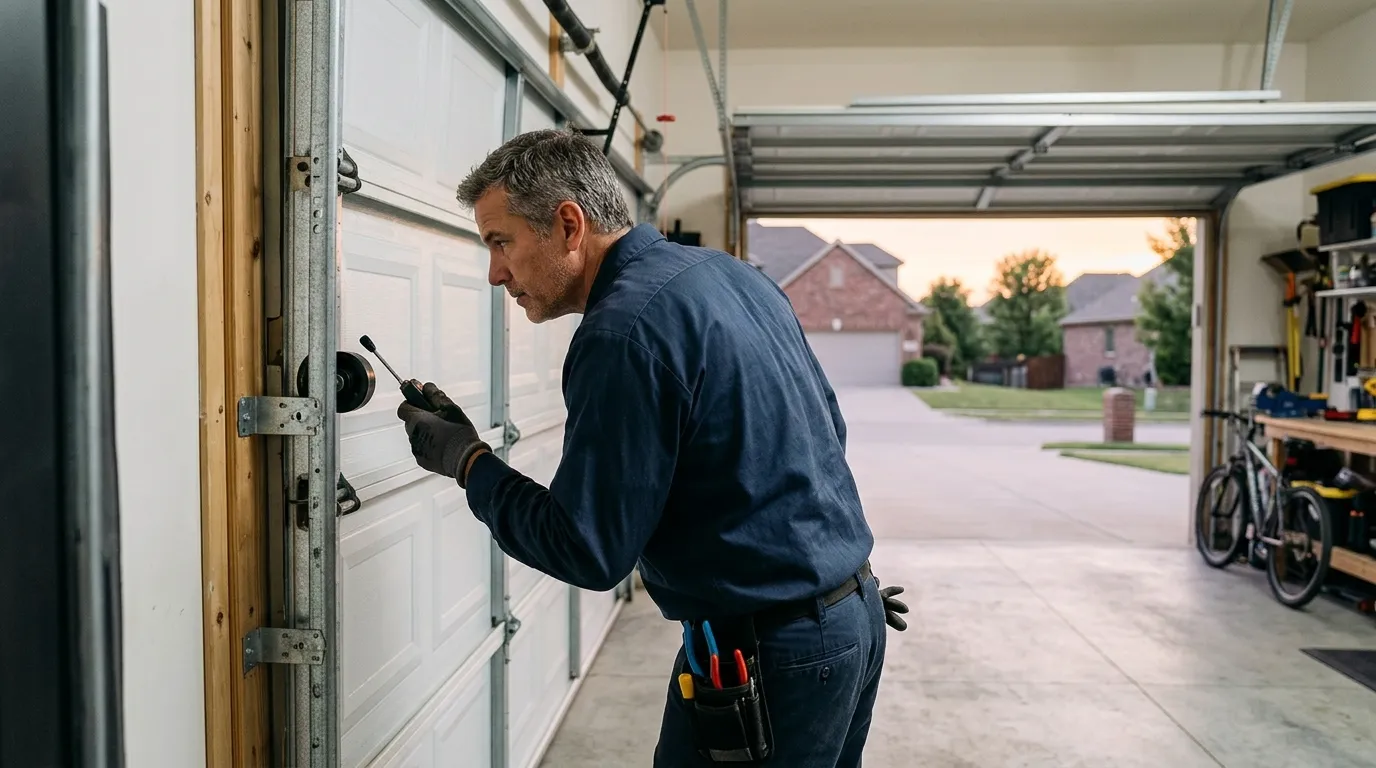
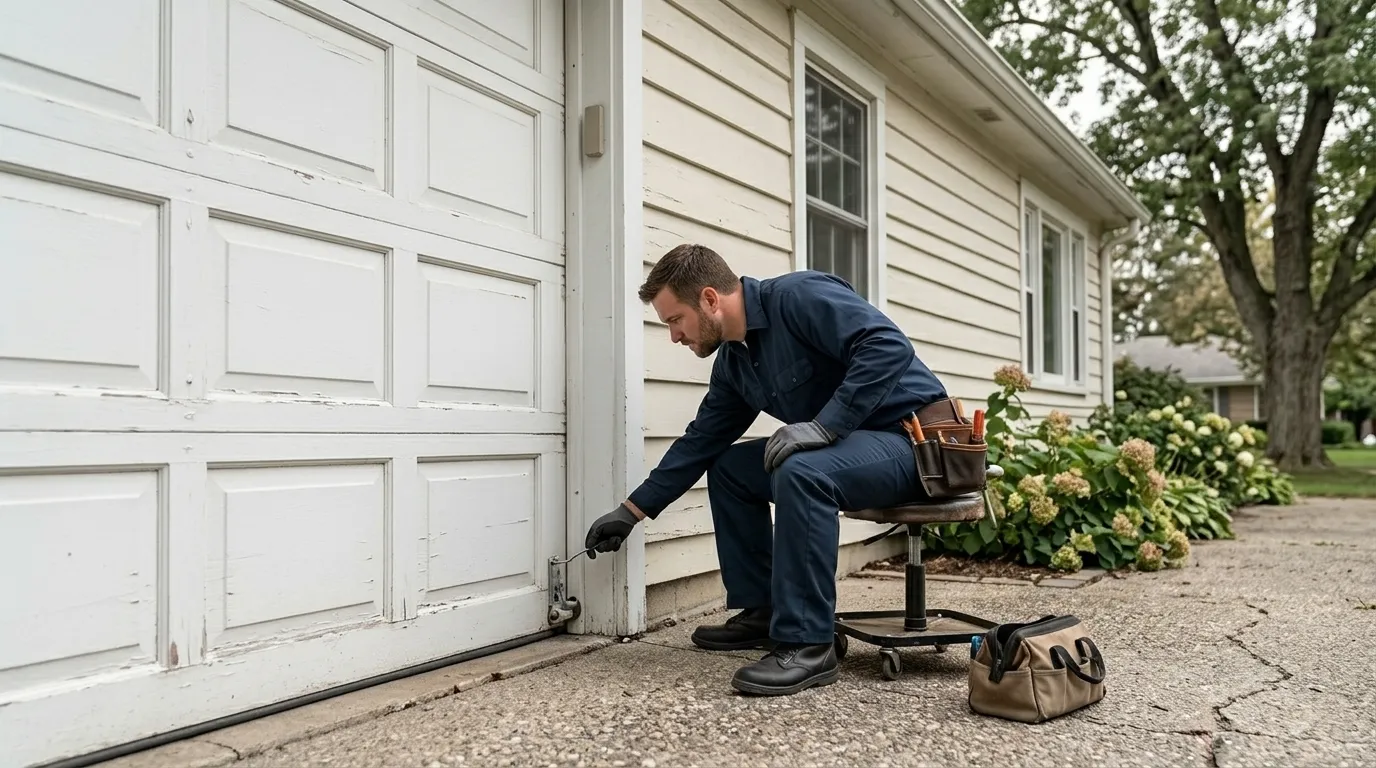
Photo-eye sensors on doors this age sit low on the tracks; wipe the lenses and make sure nothing's blocking the beam before assuming a spring or cable problem. What you shouldn't touch is anything under spring tension.
Parkland, Delray Beach
Parkland homes are newer than most of this service area, which changes what breaks first. Fourteen miles out from Delray Beach, here's how the call actually runs.
Local causes
Parkland sits fourteen miles from Delray Beach, which matters more than it sounds like it should. It's not a same-street callback if a spring lets go mid-morning and the truck has to cross that distance with the right torsion spring already on it, not guessed at.
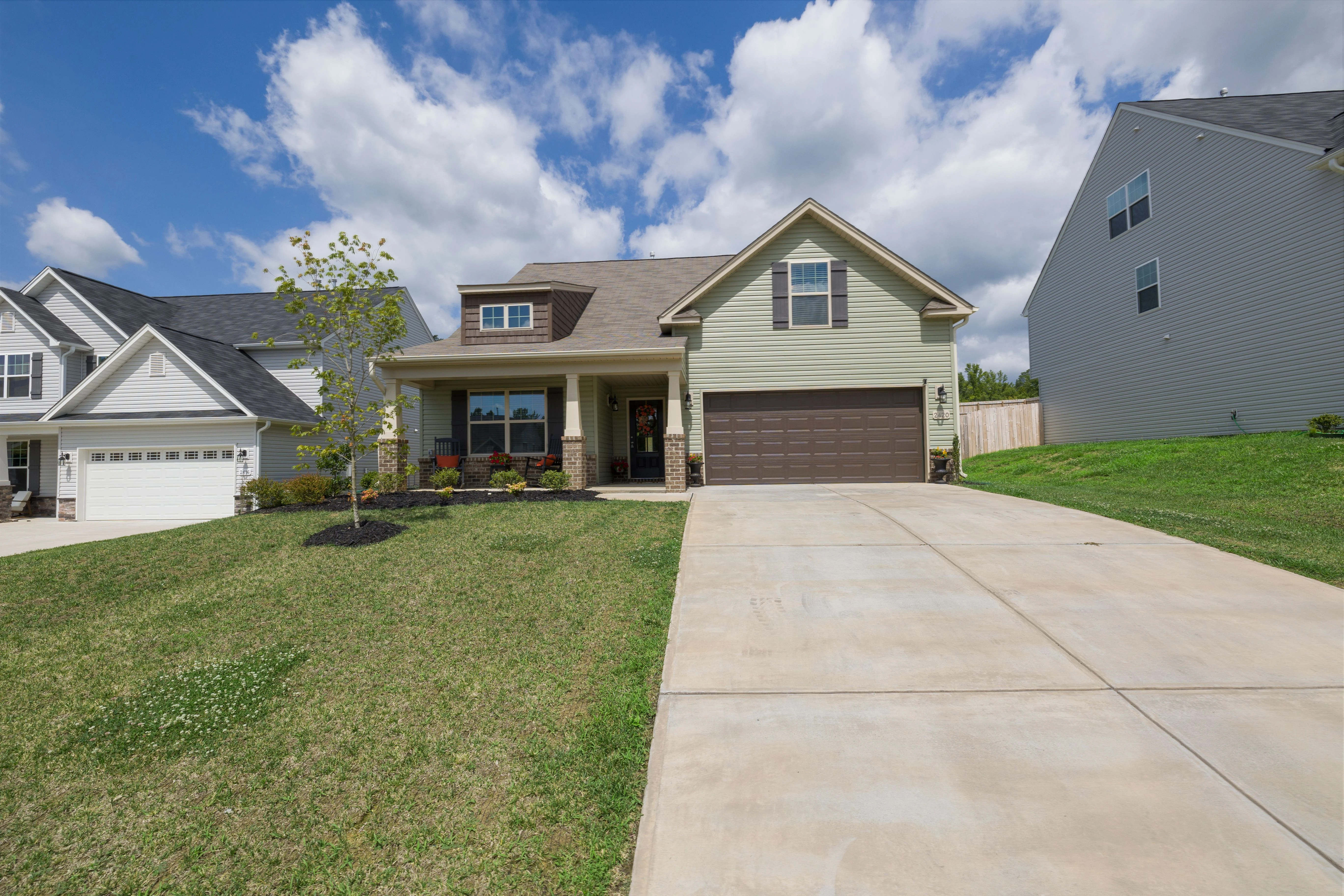
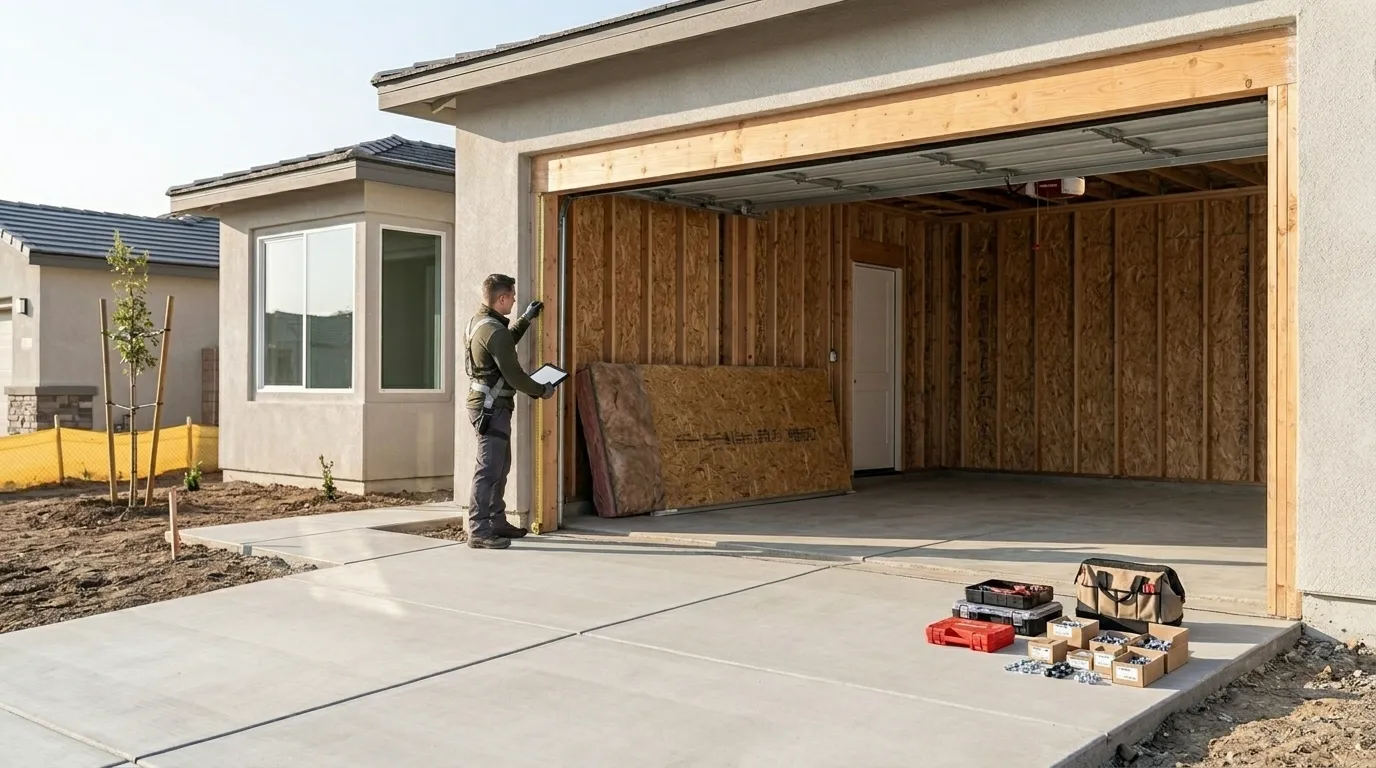
What also sets Parkland apart from most of the towns this company covers is the age of the housing. Across the wider service area the typical house went up around 1977, with most stock dating to the 1960s and 70s. Parkland's median build year runs closer to 2005 - two full decades newer. That's a different door generation: steel sectional panels on nylon rollers, extension or torsion springs sized for heavier insulated panels, openers with circuit boards instead of simple relay logic. The failures that show up are less about a fifty-year-old torsion drum nobody makes anymore and more about a strut that's bent from an opener force setting that was never dialed back after installation, or a photo-eye sensor knocked out of alignment.
The mild coastal climate here doesn't stress hardware the way freeze-thaw regions do, so when something fails on a 2000s-era door, it's usually wear, a bad install detail, or a part that was never rated for the door weight - not age by itself.
DIY or pro
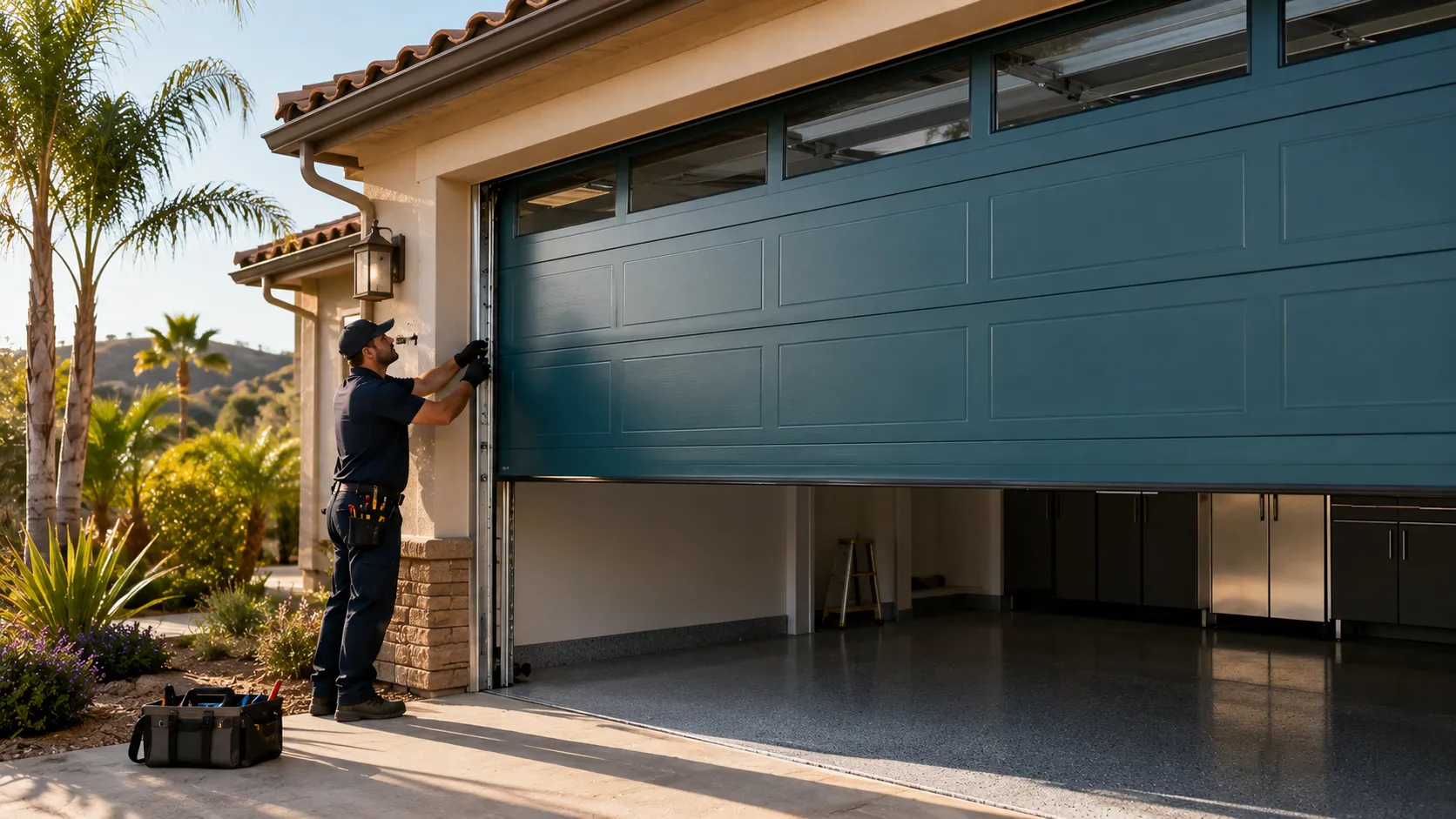
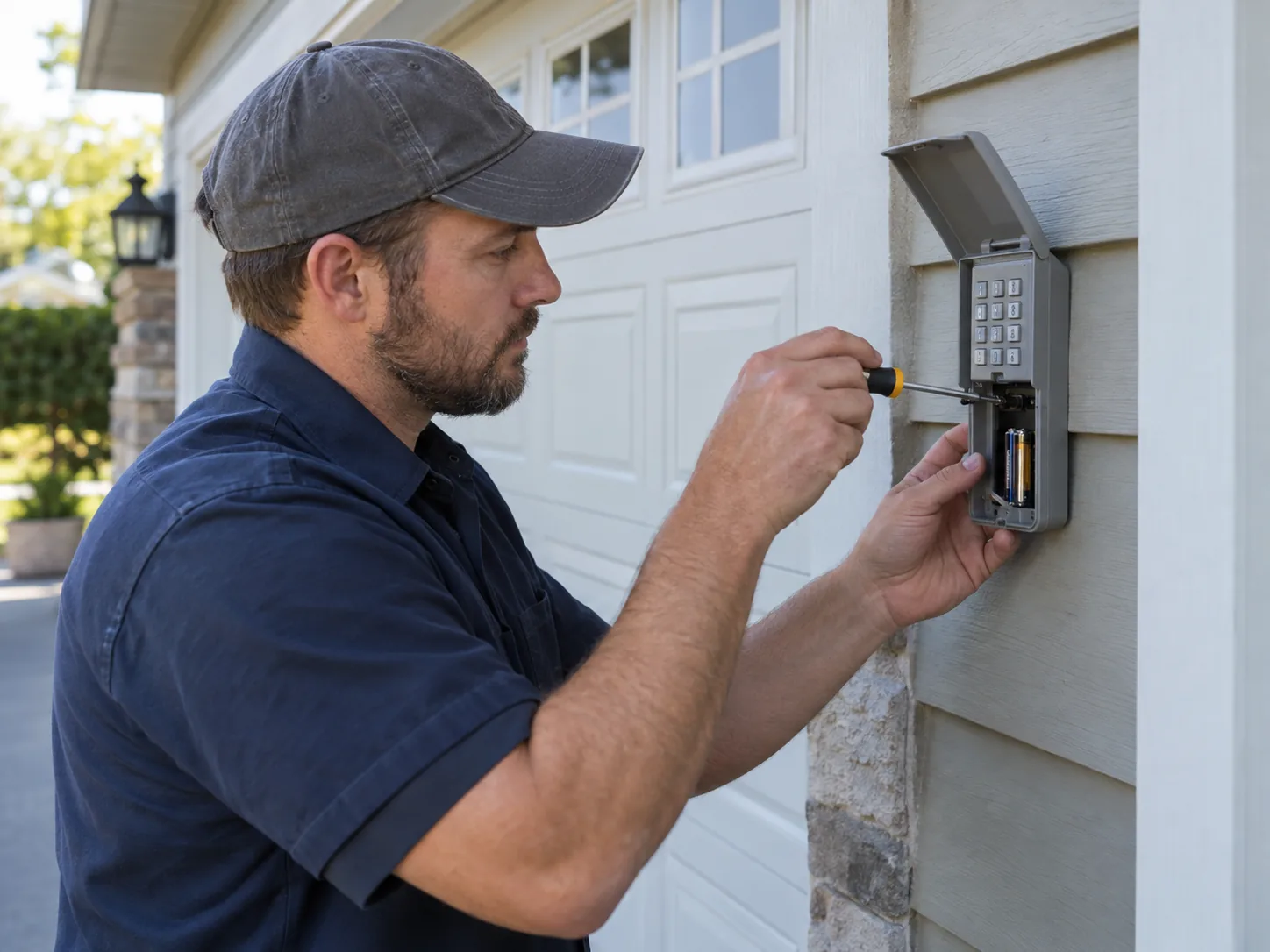
A newer door means more of it is worth troubleshooting yourself before calling anyone. If the opener has a keypad and a logic board, check the wall control first - a stuck button or a low battery in a remote causes more "broken door" calls than an actual mechanical failure.
Photo-eye sensors on doors this age sit low on the tracks; wipe the lenses and make sure nothing's blocking the beam before assuming a spring or cable problem. What you shouldn't touch is anything under spring tension.
A torsion spring on a door built to 2000s-era code still stores enough force to break a bone or worse, and that doesn't change because the house is newer. Cable frays, bent track, and a door that's off its rollers are also not weekend fixes - a torsion spring or cable failure needs a tech on site, full stop.
Given the fourteen-mile drive from Delray Beach, it's worth doing the five-minute checks first: remote batteries, sensor alignment, obstructions in the track. It saves a trip charge and it's usually where the answer actually is on a door this age.

Job timing
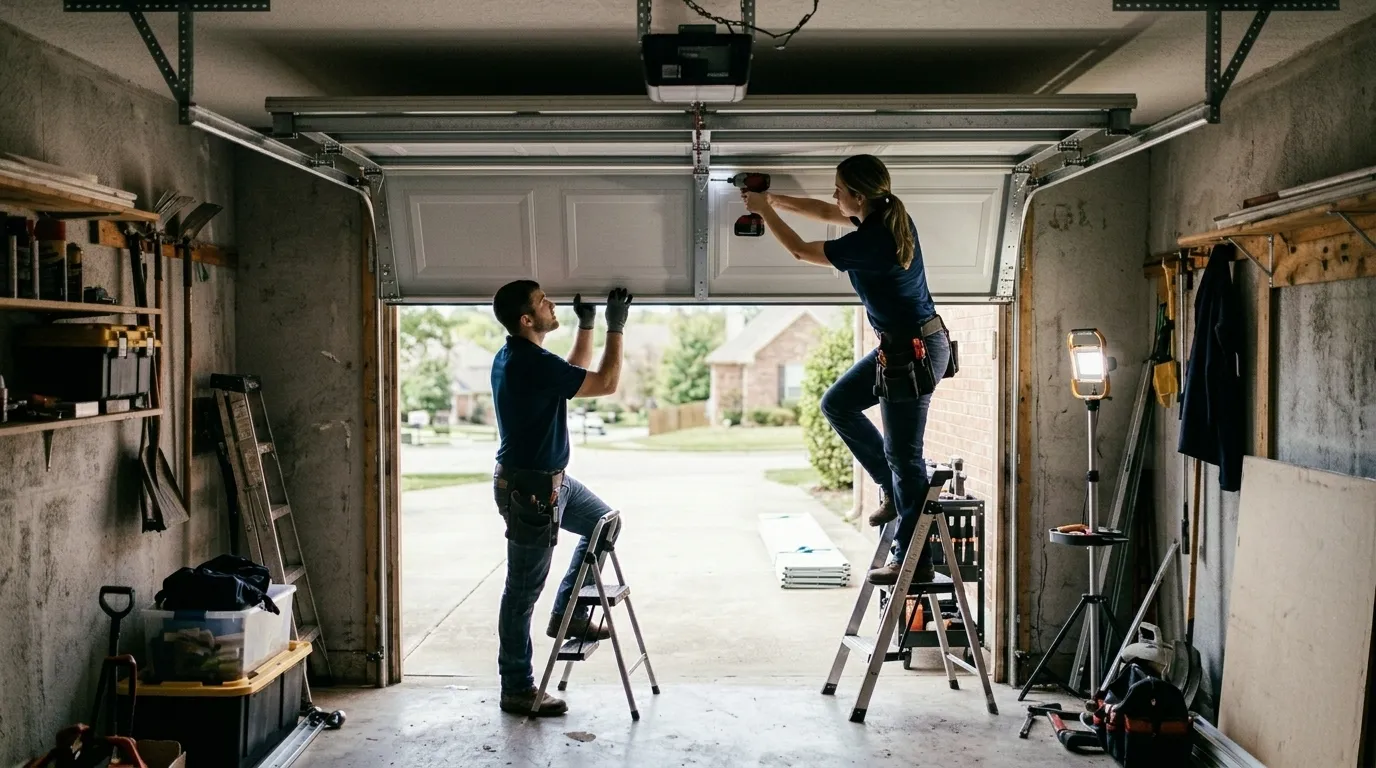
Because the crew is driving in from Delray Beach, the job here isn't scheduled the way a same-block call would be - travel time is baked into how the day gets planned. Once on site, most single-issue repairs on a 2000s-built door - a broken spring, a misaligned track, a bad roller - run inside the same window as anywhere else in the service area; the door's age doesn't slow the actual repair down.
What can add time is diagnosing an opener issue on a house this age, since boards and logic sensors take longer to trace than a simple mechanical failure. A tech won't guess at that over the phone - it gets a look in person before a fix gets quoted.
Watch-outs
The most common miss on a Parkland-era door is treating an opener force or limit setting like a spring problem. A door that's dragging or reversing partway open often gets blamed on the springs when the real issue is the opener's travel limits never being reset after a panel replacement or a hardware swap. Replace a spring on a door where the opener force is wrong and the new spring wears out fast too.
The other spot this goes wrong: a strut or reinforcement bracket bent just enough that the door binds only some of the time. It looks intermittent, gets written off as "it's fine now," and comes back worse a few weeks later. On a door this age, that's a hardware fix, not a spring fix, and mixing the two up means paying for a part that wasn't the problem.
The repair
On a door from this build era, the fix usually starts with pulling the opener's settings before touching any hardware - force, travel limits, sensor alignment.
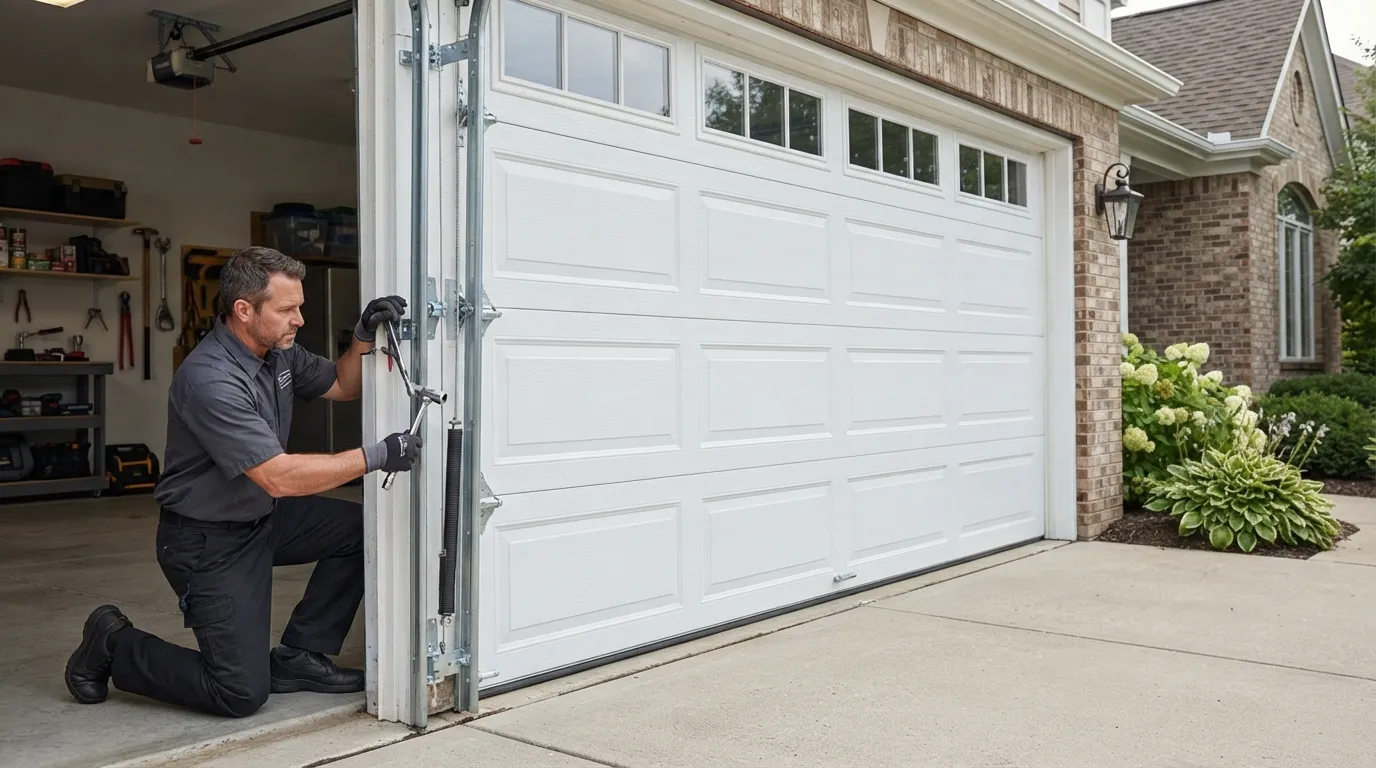
If that's clean, the tech moves to the mechanical side: spring tension, cable condition, roller and track wear. A broken torsion spring gets matched by wire size and wind, not swapped for "a spring that's close enough" - on a heavier insulated panel that's common on 2000s builds, an undersized spring fails again within months.
Bent struts or brackets get straightened or replaced depending on how much the steel has fatigued; a strut that's kinked at the same spot twice gets replaced, not bent back a third time.
One honest limit here: if a panel is dented badly enough that the steel's stretched, straightening it is a temporary patch at best - full panel replacement is the real fix, and that's what gets recommended even if it costs more upfront.
On the truck
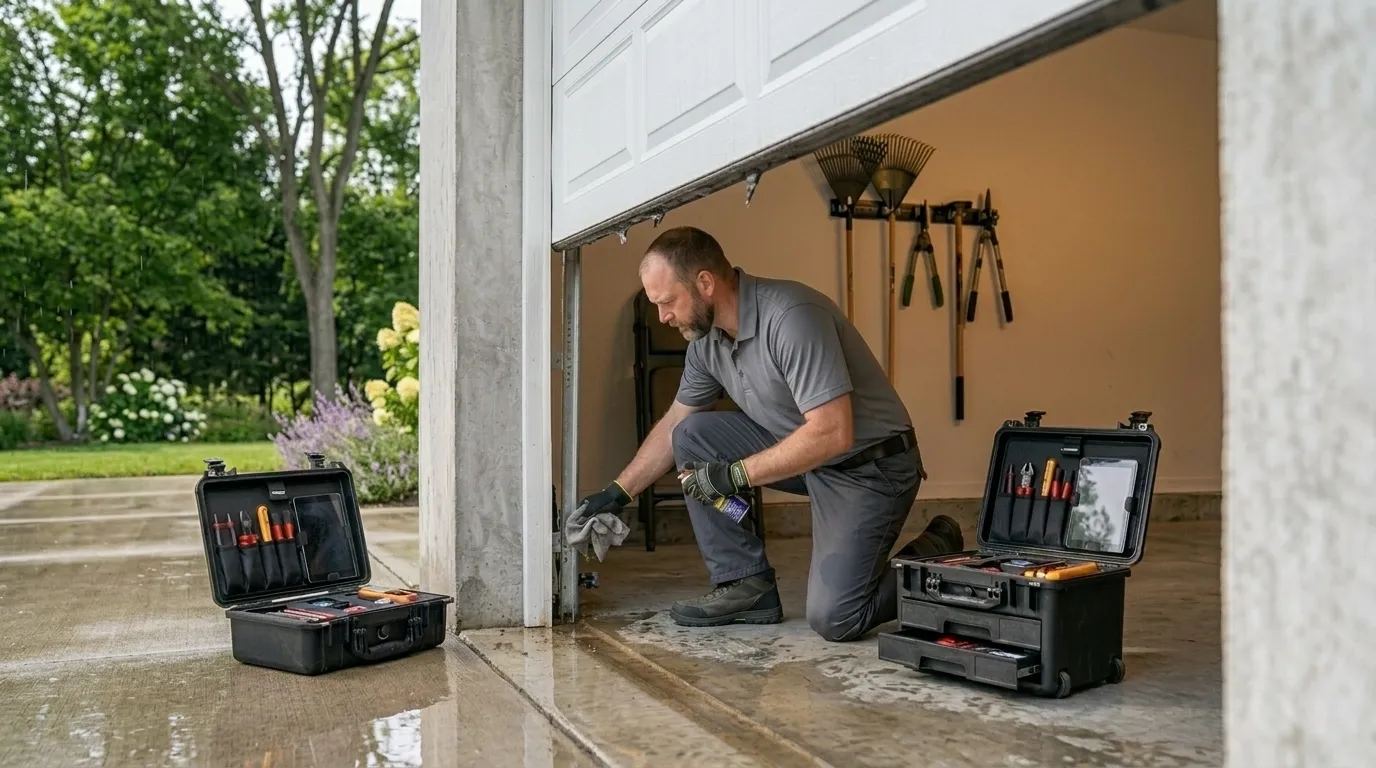
The truck carries torsion springs across the common wire-size range, standard rollers, cables, and struts sized for steel sectional doors - the parts that cover most of what breaks on a 2000s-built door. What it doesn't always carry is a specific opener control board for less common brands; those sometimes need to be ordered, which means a second trip.
Given the drive from Delray Beach, having the right spring size and hardware on the truck the first time matters more here than it would on a shorter run. That's the reason a tech will ask what's actually wrong - noise, drag, a door that won't open - before rolling out, so the truck is loaded for the job it's actually going to do.
Questions
It's a fourteen-mile drive, so the truck needs to be loaded with the right spring size and hardware before it leaves - there's no quick second trip back to a shop if the wrong part shows up. Describing the problem clearly on the phone helps make sure the first trip is the only trip.
Yes. Parkland's housing runs newer, with a median build year around 2005, compared to the wider service area where most homes date to the 1960s and 70s. That means steel sectional doors with heavier insulated panels and opener logic boards, not the older torsion drums and simple relay openers common in older housing stock.
On doors from this build era, opener setting issues and bent struts or brackets show up more than the classic worn-out torsion spring you'd see on an older door. Age-related spring failure still happens, but it's less dominant here than in older housing across the service area.
Some of it, yes - check remote batteries and clean the photo-eye sensors first, since those cause a lot of "broken door" calls on newer openers. But don't touch anything under spring tension or try to straighten a bent strut yourself. Those need a tech on site.
Explore more
Ready when you are
Delray Beach Garage Door Pros repairs and installs garage doors, springs and openers in Delray Beach, FL and the surrounding area.