Broken Garage Door Springs
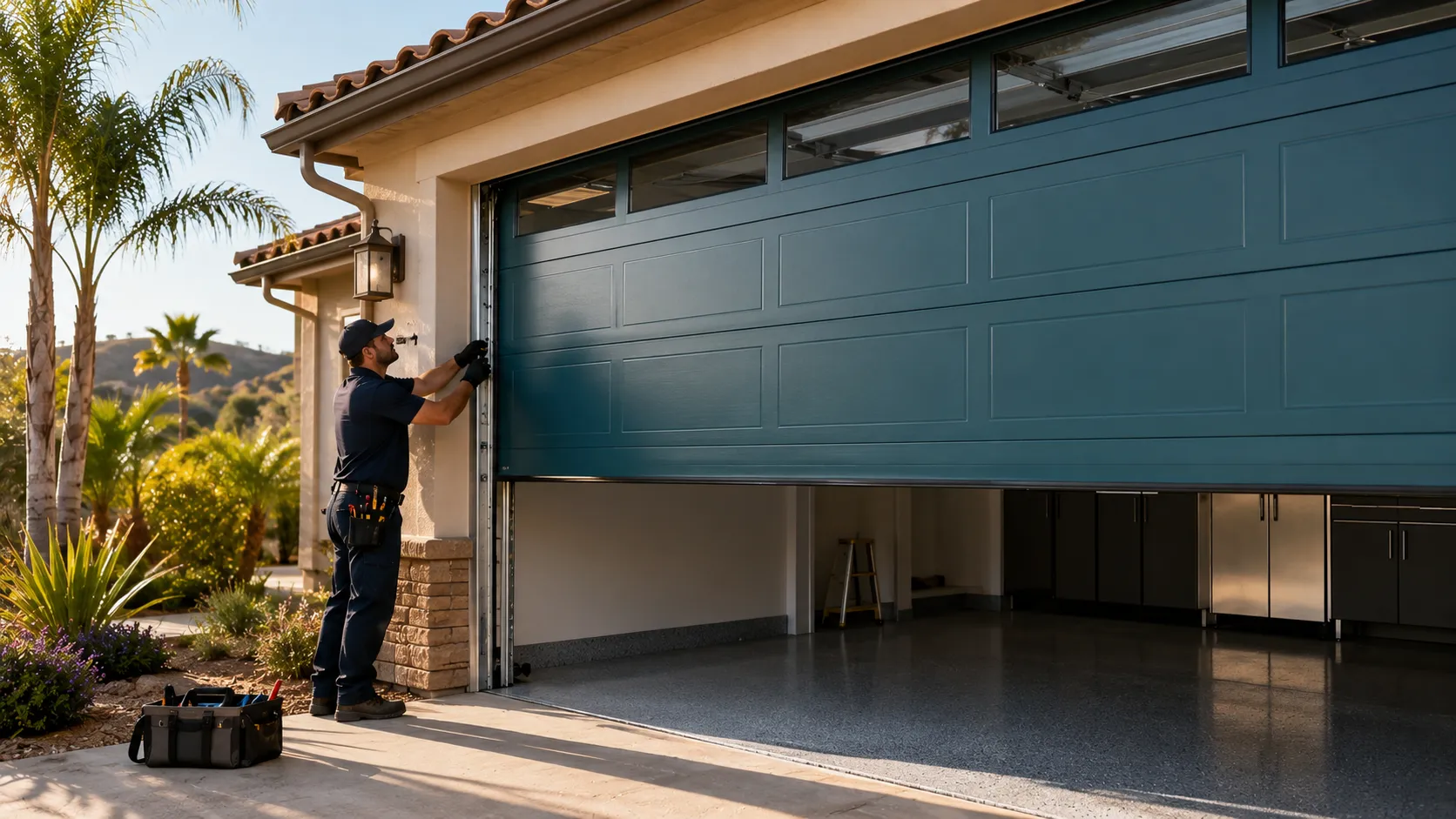
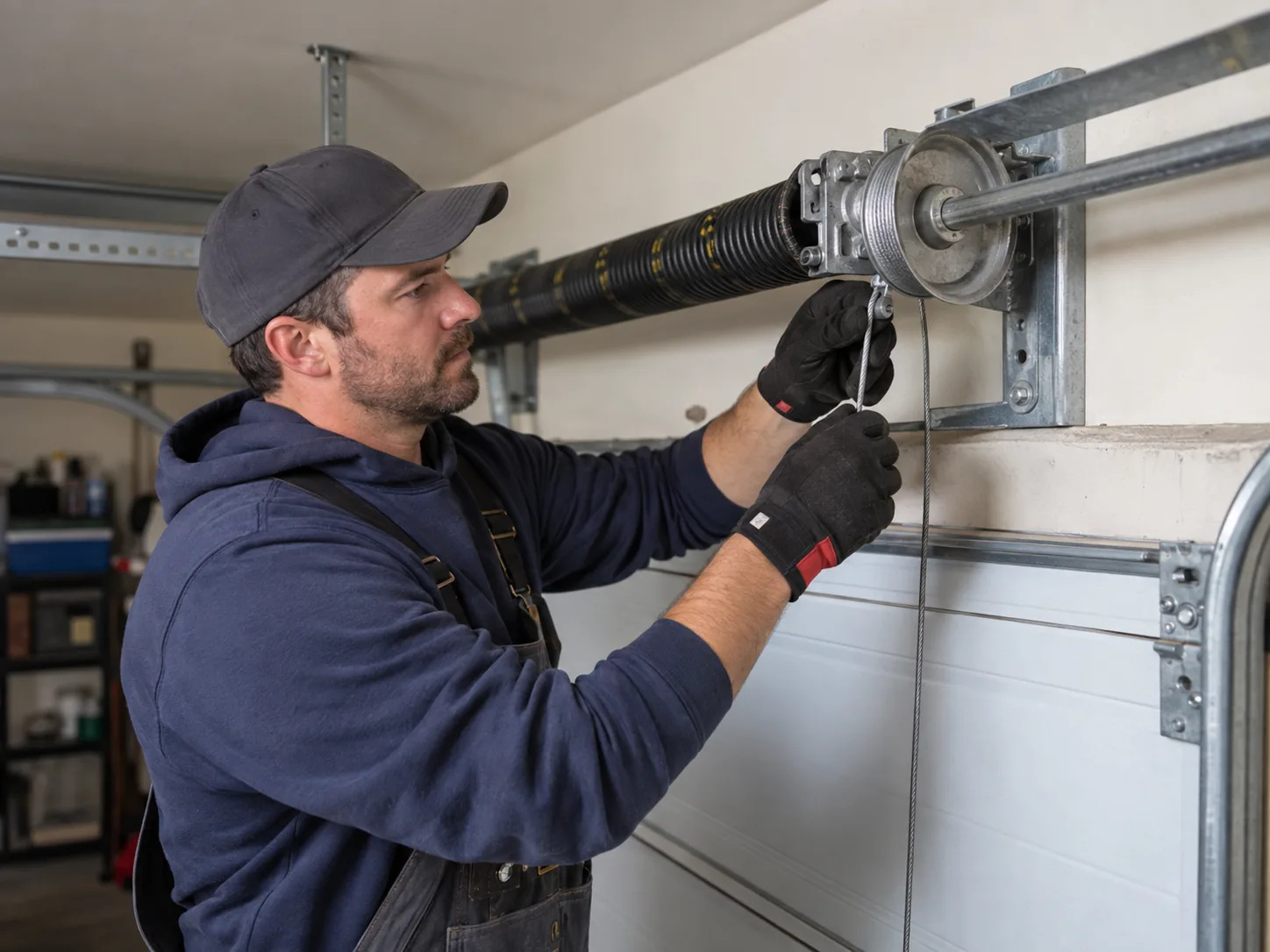
Garage door springs eventually reach the end of their useful cycle life after years of repeated opening and closing, particularly on older double-wide doors.
Local garage door service · Delray Beach, FL
Garage door repair and installation for Delray Beach homes built mostly between 1965 and 2005, covering commercial garage doors, maintenance, opener repair, panel replacement, spring repair, and the residential systems common across the area's 1960s- and 70s-heavy housing stock.
Garage door services
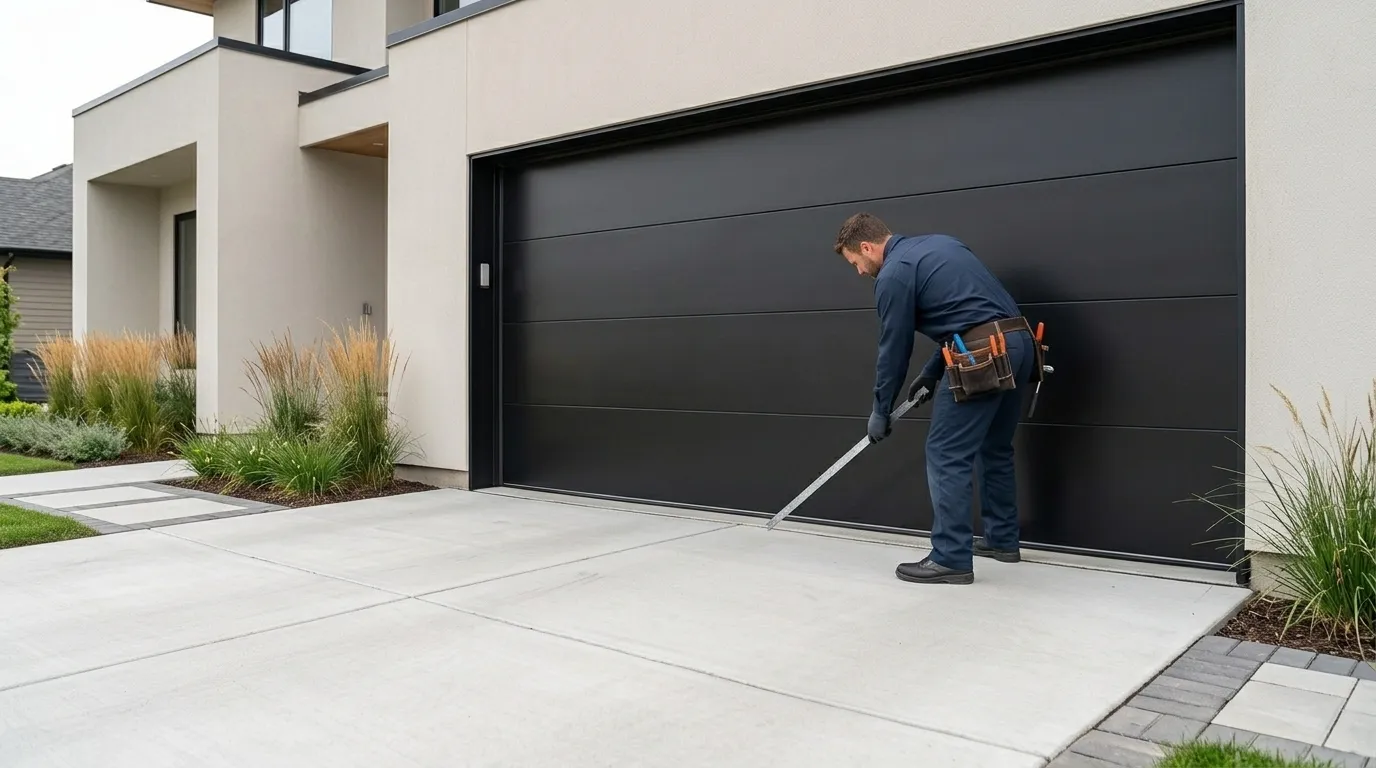
From commercial garage doors and installation to maintenance, opener repair, panel replacement, spring repair, and general garage door service, the lineup is built around the systems common across Delray Beach's older residential housing stock.
Common Delray Beach garage door problems
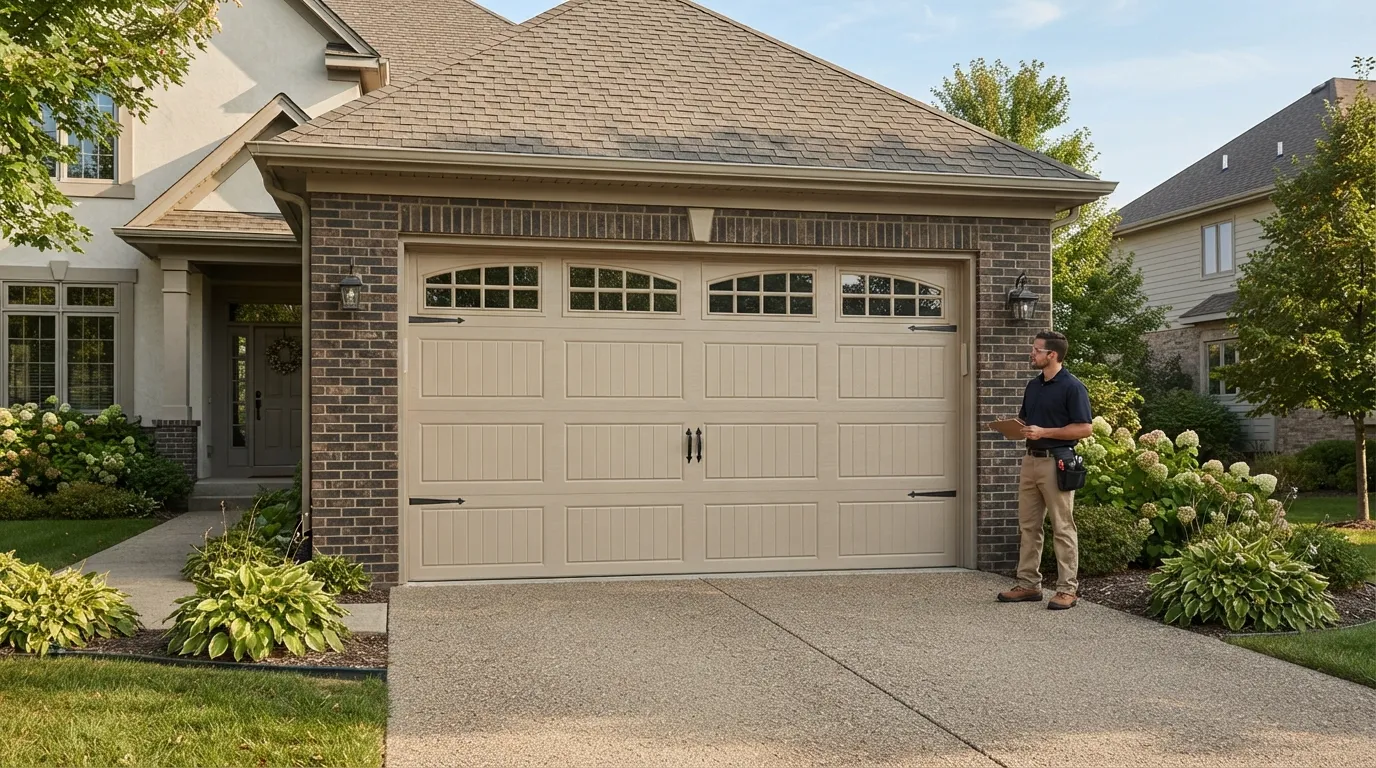
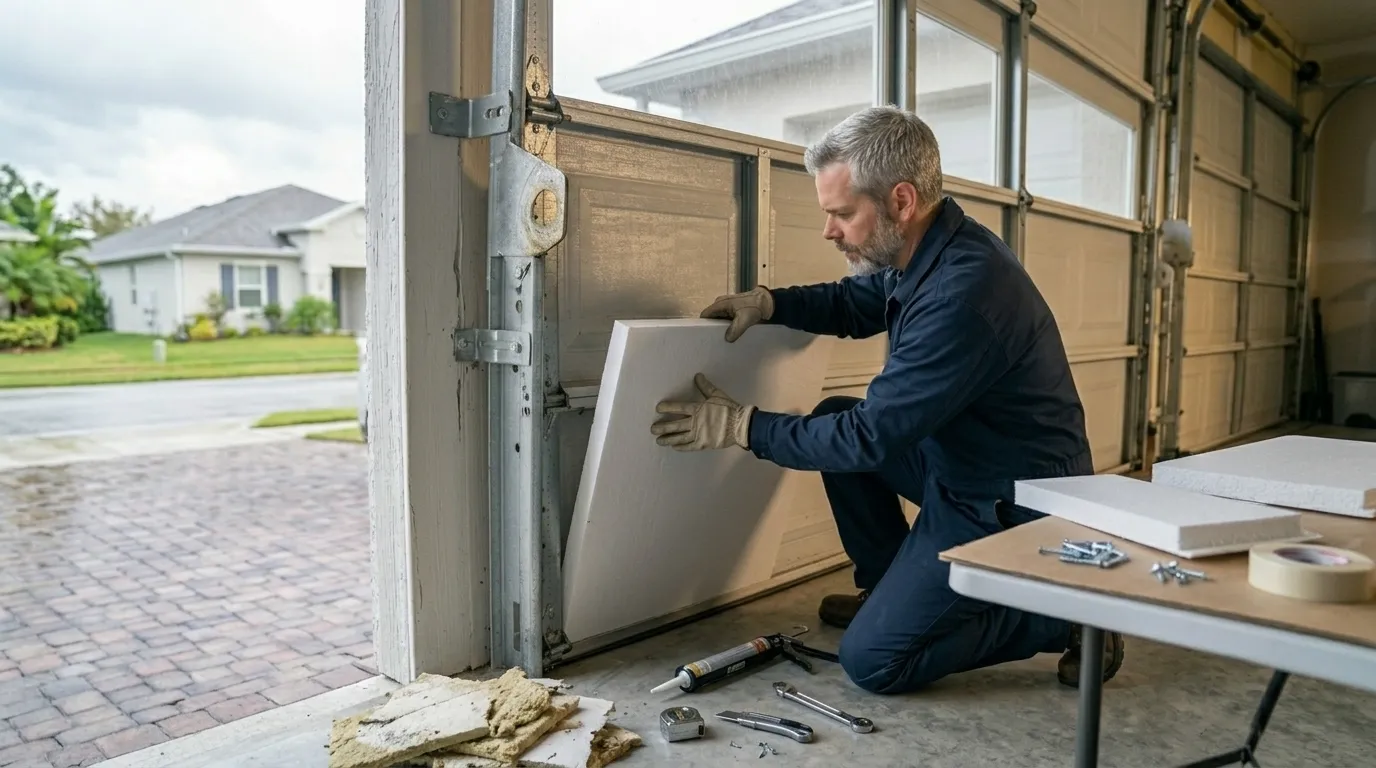
Broken springs, seized rollers, aging openers, cable wear, panel problems, and mixed-generation hardware make up much of the work across Delray Beach's 1960s- and 70s-heavy housing stock. Torsion spring failure is one of the most common needs, especially on older double-wide doors; rollers seize and cables fray on doors that saw little service; 1980s–90s openers develop worn gears or logic-board problems; and newer panels or insulation added to older track and spring systems create mixed-generation hardware that has to be checked as a complete system.
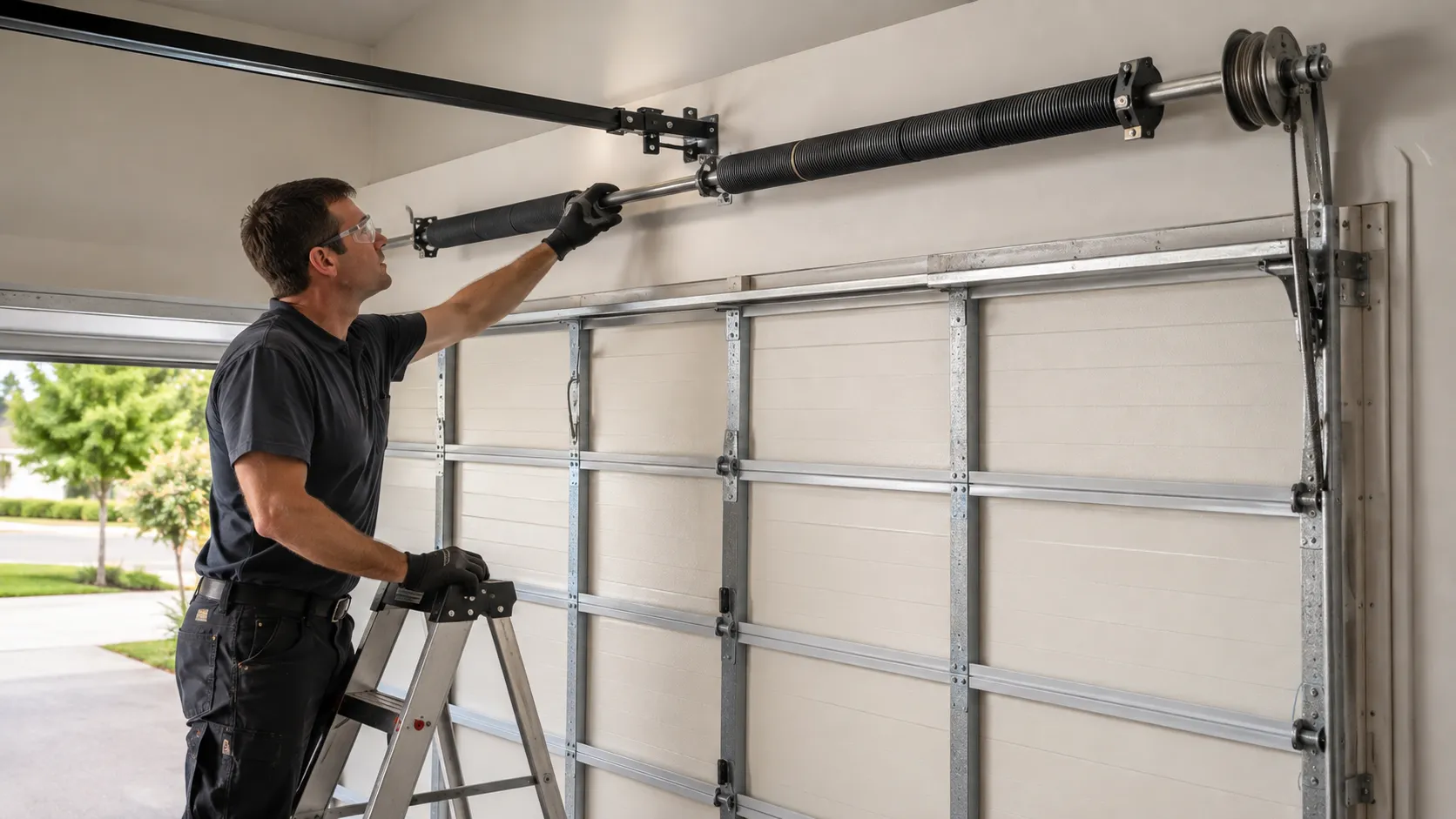
Garage door springs eventually reach the end of their useful cycle life after years of repeated opening and closing, particularly on older double-wide doors.
Older rollers can become noisy, rough, seized, or resistant after years of travel through the track, which puts extra strain on the opener.
Older opener motors, gears, logic boards, controls, and sensors can eventually develop operating problems, especially on 1980s and 90s units.
Cables can fray, loosen, or fail after years of carrying repeated lifting loads, often on doors that have received little service over the years.
Older panels, hinges, brackets, tracks, and surrounding hardware can deteriorate after decades of regular operation.
Local housing matters
The broader source service area is dominated by housing built between 1965 and 2005, with a median build year around 1977 and much of the stock concentrated in the 1960s and 70s.
That creates a large number of single- and double-car garages with steel sectional doors, torsion systems, older rollers, tracks, cables, and replacement openers from several different generations.
There are approximately 191,500 households across the broader area, including about 69,600 owner-occupied houses.
A newer panel or insulated door can sometimes be installed over much older spring, track, or mounting hardware.
The build year provides useful context, but the correct repair depends on the system actually installed today.

1960s–70s garage door systems
Homes concentrated in the 1960s and 70s can combine original tracks and torsion hardware with newer panels, replacement openers, upgraded insulation, and several generations of service work.
Steel sectional doors are common across the older residential housing stock, which shapes how panels, rollers, and hardware are repaired.
Torsion springs are a recurring repair category and should be matched to the actual weight and configuration of the installed door.
A garage may have newer panels or an updated opener while retaining much older tracks, springs, rollers, cables, or brackets.
Added insulation or heavier replacement panels can change door weight and should be considered when evaluating spring and balance requirements.
Coastal garage door wear
Delray Beach is a mild temperate, coastal environment, so age, humidity, and salt exposure matter more to long-term garage door wear than the freeze-related conditions of colder climates.
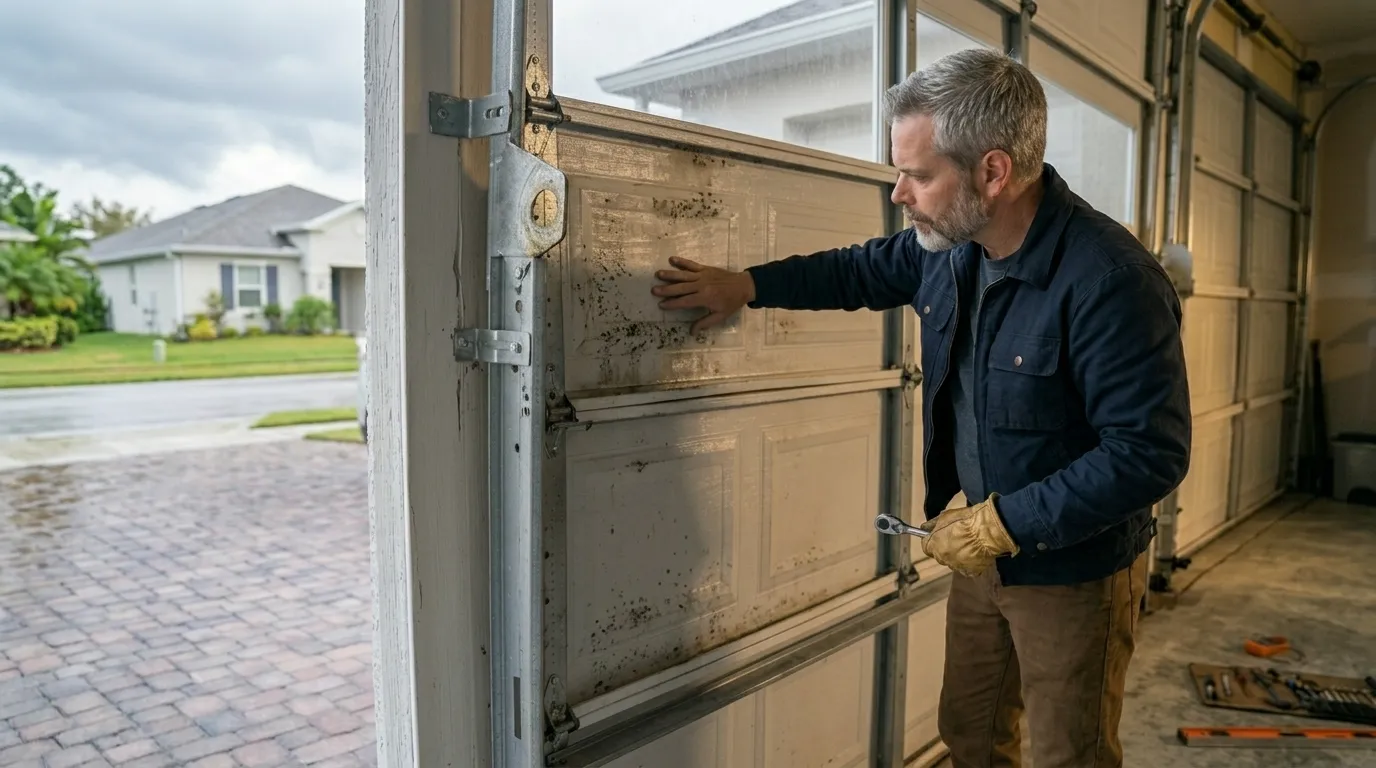
Long-term humidity can contribute to corrosion and wear around exposed garage door hardware over the years.
Coastal salt exposure can accelerate surface corrosion on steel components over time, shortening their service life.
Older rollers, cables, brackets, and other moving hardware can deteriorate as age and environmental exposure accumulate.
Steel panels, hinges, retainers, and fasteners should be checked for corrosion or deterioration on older systems.
What to expect
We look at the door and opener together rather than assuming the symptom you noticed is the only problem, identify what's actually broken, then explain the repair and price before starting.
We look at the complete system instead of assuming the symptom you noticed is the only problem, since components interact on an older door.
Springs, rollers, cables, tracks, opener components, panels, and door balance can all affect how the system operates, so each is checked.
The failed component, repair scope, cost, and whether repair remains worthwhile are explained before work begins.
If an uncommon or discontinued opener component needs to be sourced, we explain that rather than promising an immediate repair.
Some Older Opener Parts May Need Ordering
Rare or discontinued opener models can require additional sourcing and may make replacement more practical in some cases.
Keep the system moving
With much of the local housing now decades into regular use, periodic inspection can catch spring fatigue, cable wear, roller problems, corrosion, track movement, and opener strain before a small issue becomes a complete failure.
Changes in door balance can indicate the spring system is no longer carrying the door as effectively as it should, which is worth catching early.
Fraying, rough travel, looseness, or visible wear can point to developing lifting and guidance problems before a failure.
Tracks, hinges, brackets, and fasteners can be checked for movement, corrosion, looseness, or long-term wear.
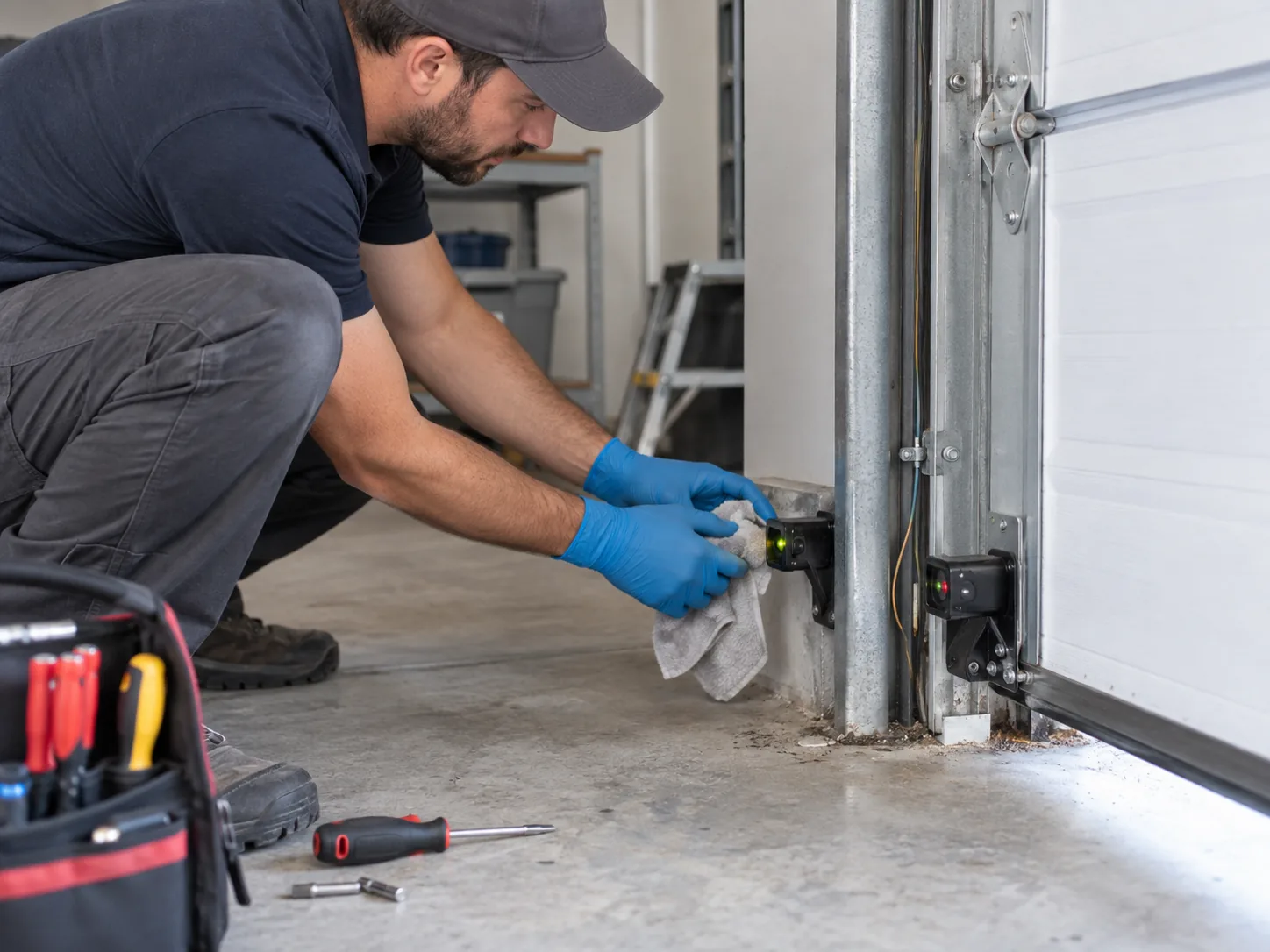
Changes in sound, travel, sensor response, remote reliability, or drive performance can provide early signs of opener trouble.
Clear repair guidance
There isn't one flat repair price, because a single-door spring repair, double-door hardware work, opener repair, panel replacement, and installation are different jobs.
Spring configuration, door weight, roller and cable condition, opener model, panel condition, and whether parts match the original garage all affect the scope.
Median household income across the broader service area is approximately $86,644.
We diagnose the actual problem and use components that properly match the installed system rather than relying on a generic replacement.
If repairing an aging system no longer offers good value, that comparison is discussed before more money is put into the door.
Repair or replace?
A garage door from the 1970s is not automatically a replacement candidate. Repair remains practical when the structure is sound and the failure is isolated, while replacement becomes more sensible when several major systems are deteriorating together.
A targeted repair can make sense when the panels, tracks, cables, opener, and surrounding hardware remain serviceable. One failed part is no reason to replace a sound door.
A newer door with one isolated opener component failure can remain a strong repair candidate when compatible parts are available.
Replacement becomes more practical when springs, tracks, panels, rollers, and other major hardware are all reaching the end of their useful life together.
When essential older parts are difficult to source, replacement can sometimes be faster and more practical than continuing to repair an obsolete system.
Service areas
Questions
Yes, we cover the surrounding area including Golf, Ocean Ridge, Lantana, Atlantis, Lake Worth Beach, Greenacres, Palm Springs, and Wellington, along with the rest of the corridor out to about 20 miles.
Usually not. A large share of the housing in this area was built in the 1960s and 70s, so we carry and source the torsion spring and hardware sizes that match those original garages regularly. It's the rarer, discontinued opener models that sometimes mean a wait.
If the springs, track, and panels are all original to a house built decades ago, replacement usually costs less over time than repeated repairs. If it's a newer door with one failed part, repair almost always makes more sense. We'll tell you which situation you're in before we start any work.
Delray Beach sits in a mild temperate band, so we don't see the frost-related cracking or seal failure that colder climates cause. Most failures here come from age, humidity, and salt exposure wearing on rollers, cables, and springs over time rather than sudden weather damage.
Ready when you are
Tell us what the door is doing and we'll help you figure out whether you're dealing with a spring, opener, panel, roller, cable, maintenance issue, aging hardware, or a system that's reached the point where replacement makes more sense.