
Guide
What Makes Garage Doors Slip Off Track in Delray Beach
Delray Beach homes built between 1965 and 2005 often run original track hardware. Here's why doors slip off track and when it stops being a DIY fix.
Local detail
Season by Season
Delray Beach sits in a mild temperate band, so you don't get the freeze-thaw cycle that racks tracks apart in colder states. That's actually part of the problem. Homeowners here assume a mild climate means the door hardware just lasts, and a lot of the time it does - until it doesn't. There's no dramatic cold snap that forces a spring to snap or a track to warp overnight. Instead, the wear is slow and steady, the same 12 months a year, decade after decade.
A track that's been bolted to the jamb since the late 1970s doesn't announce itself. It just drifts a little more out of true each year, and by the time a roller starts binding or a panel starts rubbing the weatherstrip, the misalignment has usually been building for years. If you own one of the 20 or so pockets of Delray Beach with older stock, don't wait for a season to tell you something's wrong. There isn't one. The door tells you on its own schedule, not the calendar's.

The area
What Is Going On
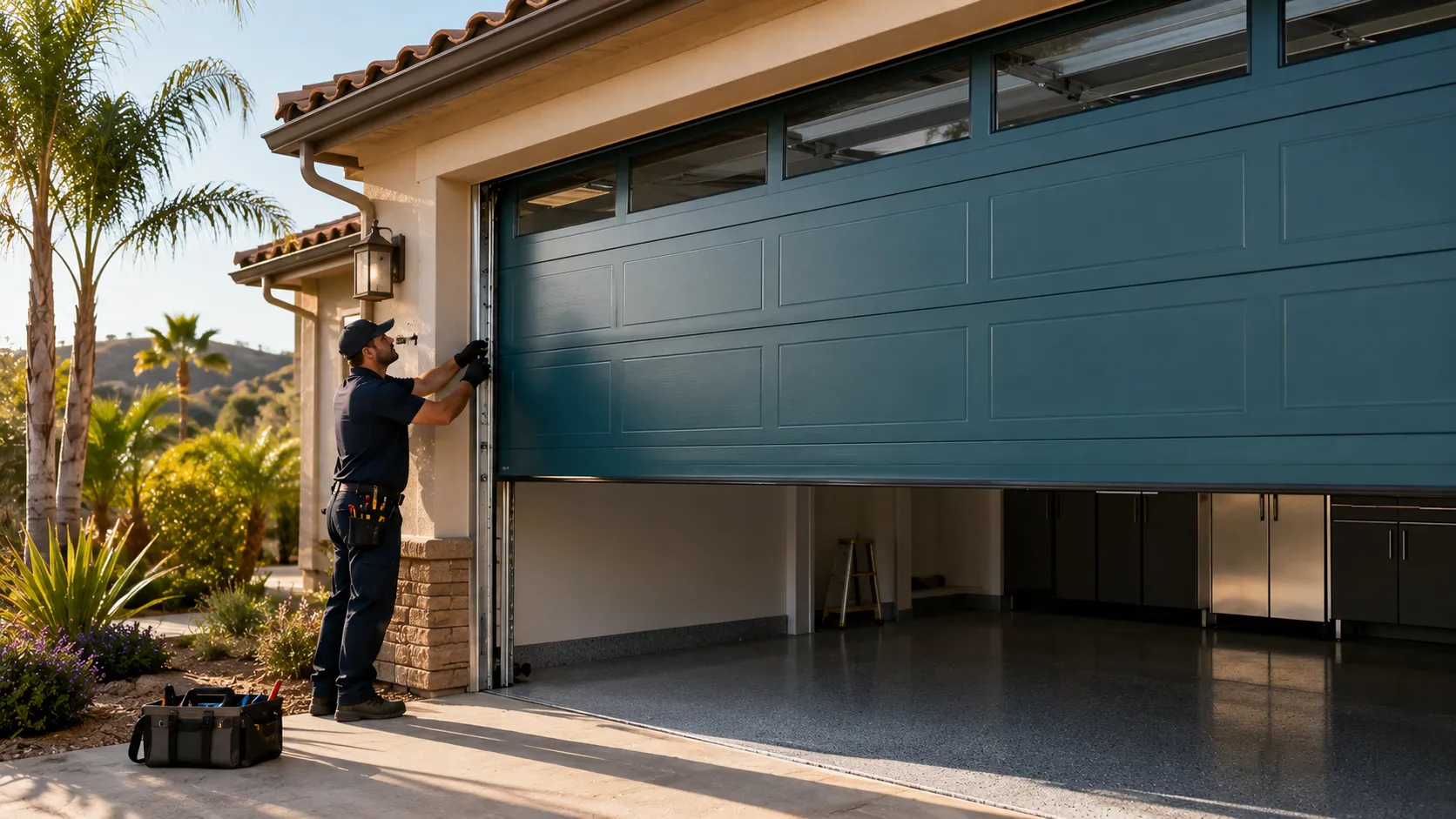
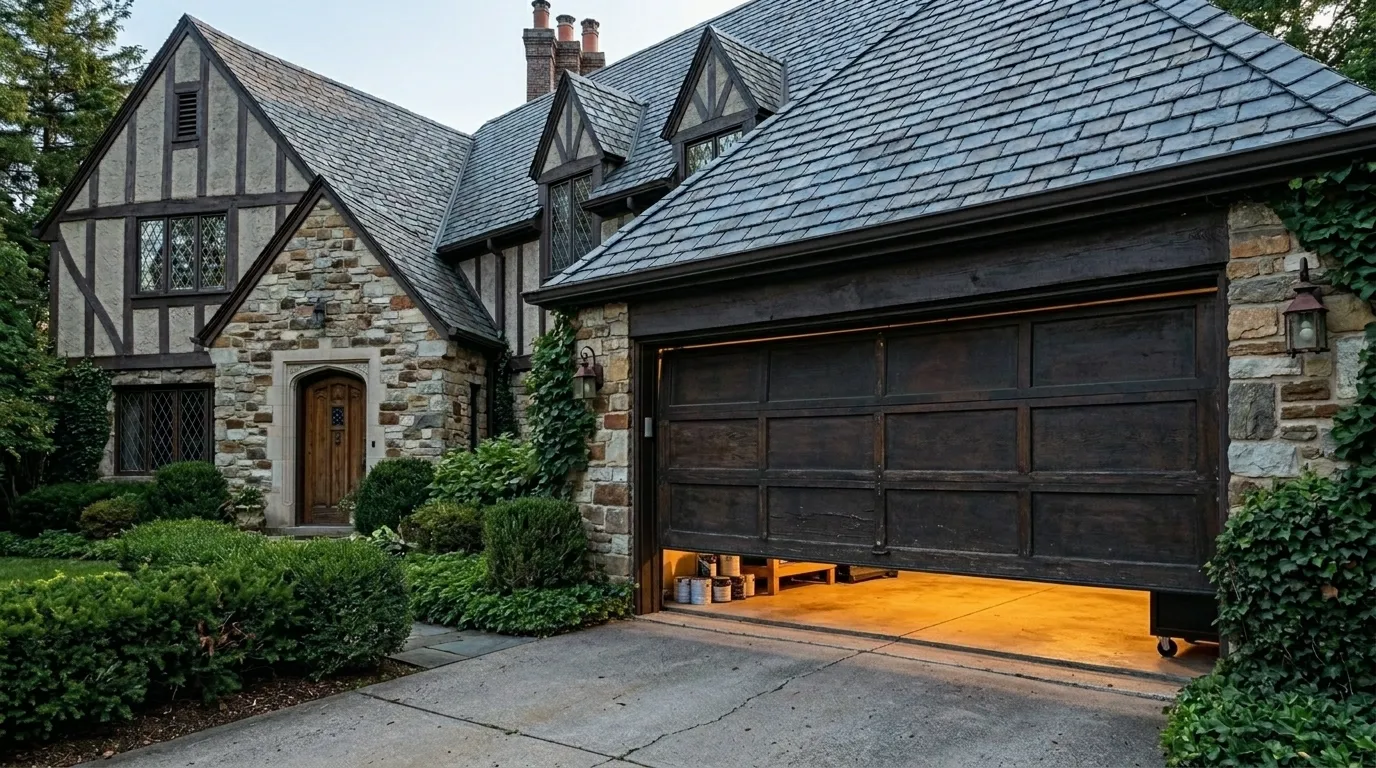
Most of the housing here went up between 1965 and 2005, with a lot of it clustering around 1977. That matters because track brackets from that era were fastened straight into wood jambs that have had 40-plus years to move, settle, and dry out. When the jamb shifts even an eighth of an inch, the track bolted to it shifts with it, and the door starts riding the rail at a slight angle instead of straight up and down. Rollers wear unevenly, cables start to jump their drum, and eventually a roller pops clean out of the track.
On the newer end of that build range - houses from the 1990s and early 2000s - the tracks are usually in better shape, but the brackets are often the original ones too, and 25-plus years of daily cycling loosens lag screws no matter how well the house was framed. Either way, the root cause is rarely a single dramatic event. It's cumulative movement in old hardware that was never designed to be adjusted, only installed once and left alone.
What we find
When It Stops Being a DIY Job
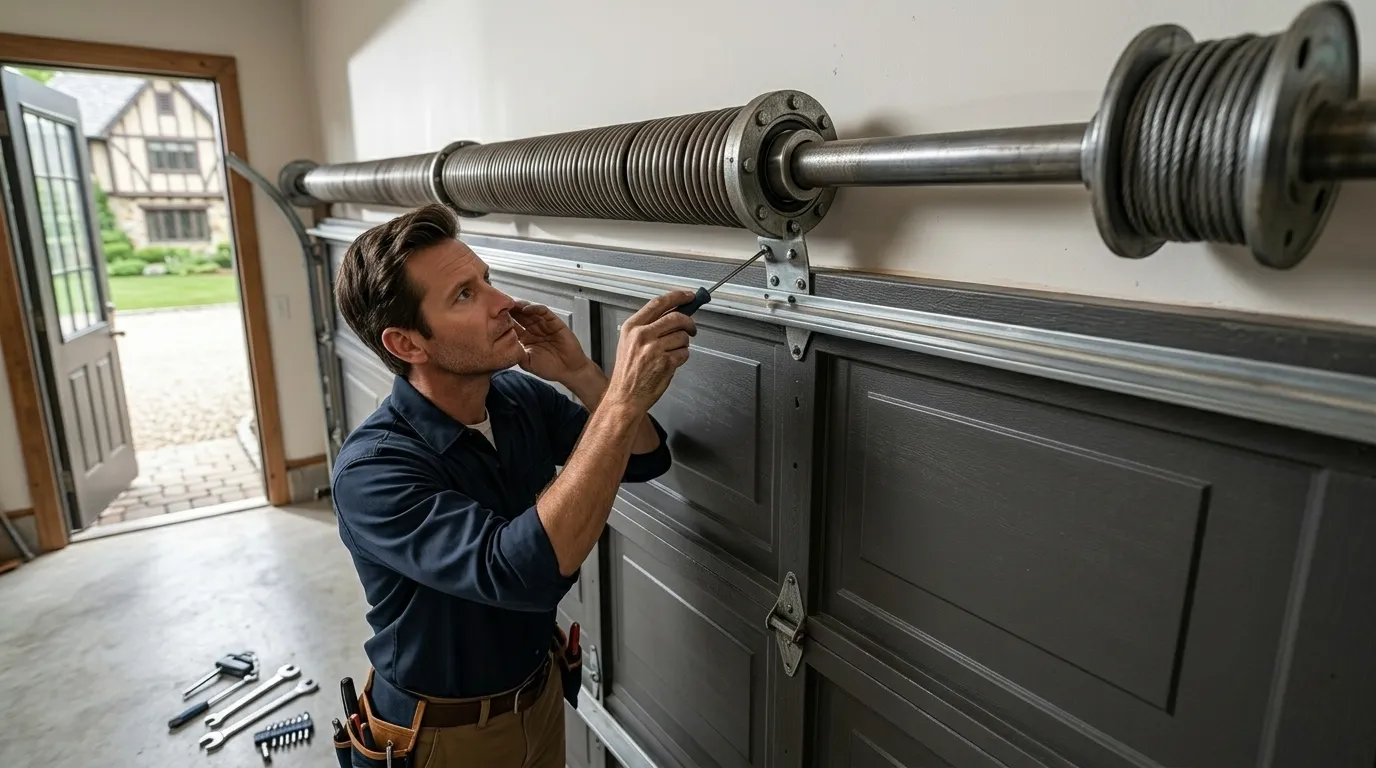
Re-tensioning a loose bracket or tightening a lag screw is fair game for an owner with a ladder and a socket set. Realigning a track that's already bent, or a door that's popped a roller on one side while under spring tension, is not - that's where people get hurt. If the door is off track on both sides, if a cable has jumped its drum, or if the opener is straining against a door that won't move freely, stop pulling the emergency release and stop forcing it.
Here's the honest limit: we don't recommend trying to force a torsion-spring door back onto its track yourself, because the spring can still be wound tight even when the door looks stuck. That's a call, not a project. On the other hand, if it's just a loose roller bracket on a light-use single door, plenty of owners handle that themselves, and we're not going to tell you otherwise.
How we work
What the Weather Here Does to It
People blame the weather for garage door trouble more than the weather actually deserves in a mild temperate climate like this one. There's no hard freeze cracking seals, no snow load bending panels. What the climate here does contribute is a steady, unbroken cycle of daily heat that keeps metal expanding and contracting slightly every single day, all year, with no cold months to slow that cycling down.
Over 40-plus years on a house from the 1970s stock, that adds up to more total expansion cycles than a door in a four-season climate would see in the same span. It's a slow tax on the brackets and track seams, not a sudden event. So when a track finally gives out here, it's less often a dramatic weather story and more often just math: decades of daily thermal movement on hardware nobody's touched since it went in.
Questions
Common questions
Why did my garage door suddenly come off the track with no warning?
It rarely happens with no warning - the misalignment usually built up slowly in the bracket and jamb over years, especially in houses from the 1965-2005 stock common around Delray Beach. What feels sudden is often just the moment a roller finally slipped past the point of no return.
Can I push the door back onto the track myself?
If it's off track on one side only and there's no tension on the springs, some owners manage it. If it's off on both sides or the door won't move freely, leave it - the spring can still be wound even when the door looks stuck, and that's not a safe DIY fix.
Is the heat here hard on garage door tracks?
Not in a dramatic way. Delray Beach's mild temperate climate doesn't put doors through the freeze-thaw stress colder regions see. What it does add is decades of steady daily thermal cycling on hardware that's often original to a 1970s or 1980s build, which wears brackets down slowly rather than all at once.
How do I know if my house has original track hardware?
If your home was built in the range common to this area - roughly 1965 to 2005, with a lot of it from the late 1970s - and the track brackets have never been replaced, they're likely original. Look for rust pitting, elongated screw holes, or a track that's visibly bowed away from the jamb.
Ready when you are
Need a garage door sorted in Delray Beach?
Delray Beach Garage Door Pros repairs and installs garage doors, springs and openers in Delray Beach, FL and the surrounding area.