
Guide
What a Service Call Actually Covers
Here's what a garage door service call covers in Delray Beach, from spring and cable checks on 70s-era doors to track work suited to our mild, humid climate.
Local detail
Season by Season
Delray Beach doesn't get the freeze-thaw cycle that chews through garage door hardware up north. The climate here sits in what's classified as a mild temperate band, so a service call in January looks a lot like one in July - no de-icing springs, no swollen wood panels from snow melt. What we do see is humidity and salt-tinged air working steadily on unpainted hardware, hinges, and the springs behind a door, all year, not in a single hard season. There's no true off-season for a stuck opener or a rusted roller here; calls come in fairly evenly across the calendar, driven more by wear than by weather spikes. That steadier pattern matters for how a call gets scheduled and priced - jobs aren't stacked into a short thaw window like colder markets see. It also means a spring or cable that's failing shows the same signs in March as it does in September: fraying, corrosion at the ends, a spring that's lost its even coil spacing. If a door acts up, it's rarely a weather event that triggered it - it's the slow year-round grind finally showing.
[Back to home](/)

The area
What Is Going On
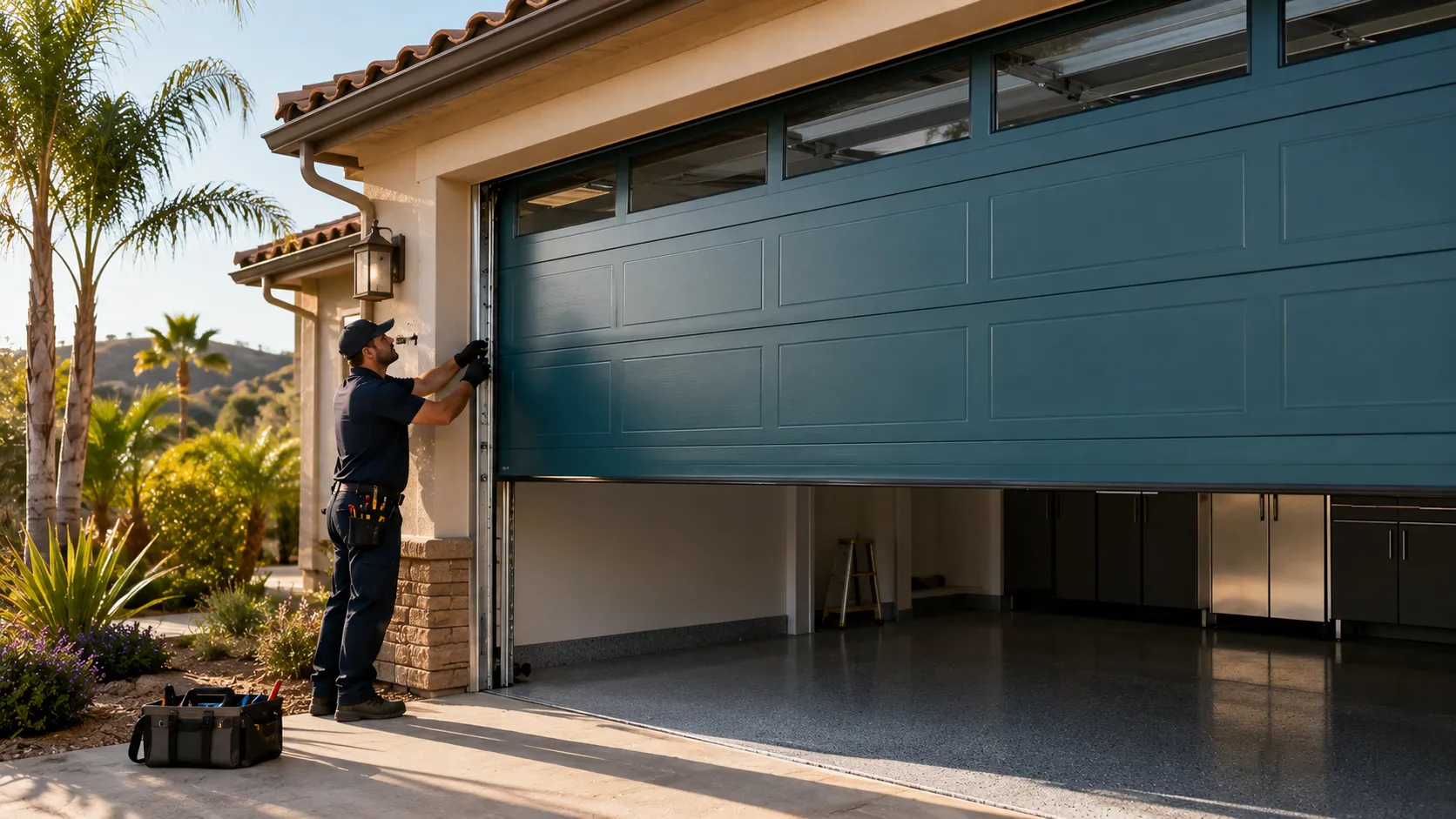
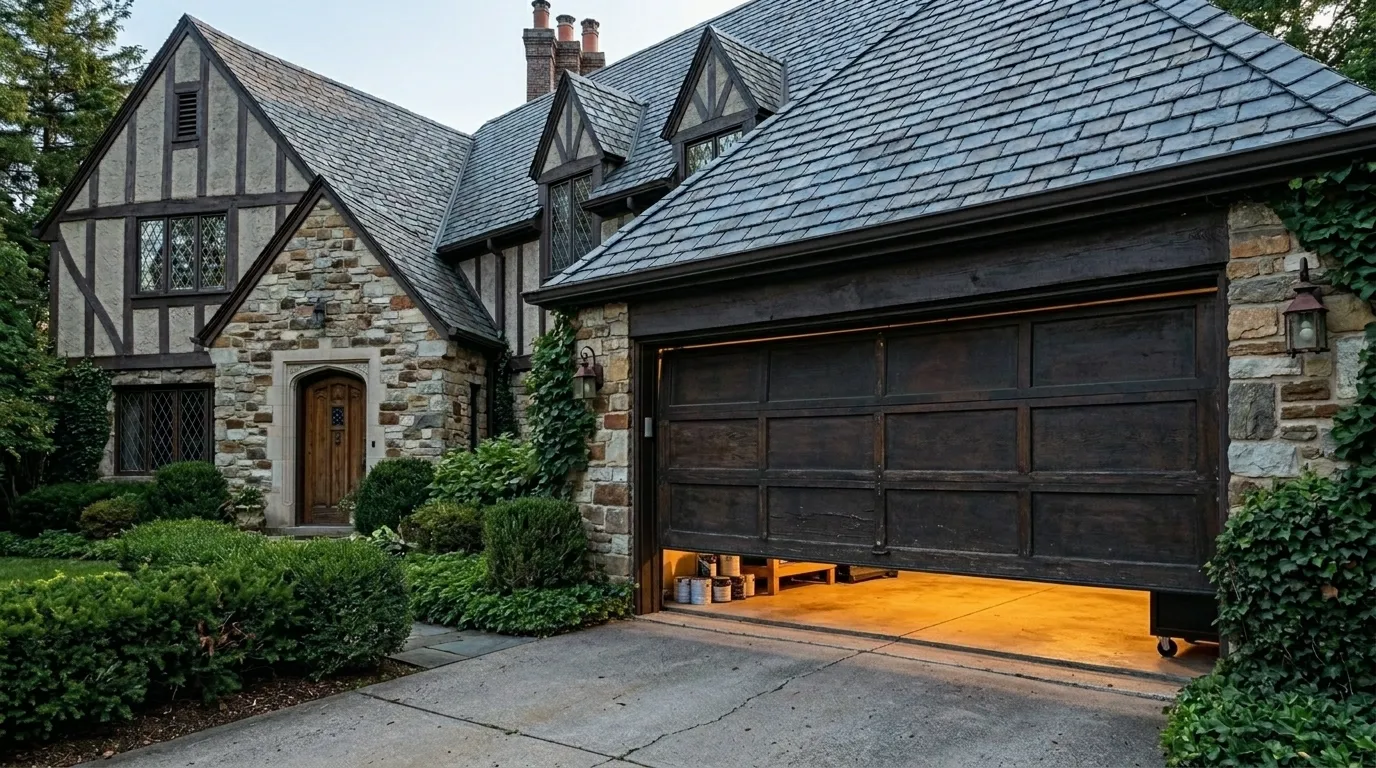
A big share of the doors we open a service ticket on sit on houses built between 1965 and 2005, with the median landing around 1977. Across the twenty communities in this area, most of that stock is 1960s and 70s construction. What that means mechanically: a lot of original torsion spring assemblies, steel tracks bent slightly out of true after decades of use, and openers that have been swapped once or twice but bolted onto hardware nobody's touched since. A service call on a house like that usually starts the same way - the question isn't diagnosing a brand-new door, it's figuring out how much of the original system is still doing its job versus limping.
Sometimes it's one part: a cable frayed at the drum, a roller cracked and binding in the track. Sometimes the whole torsion setup is original and everything downstream of it - travel limits, force settings, the opener's sensing - has been compensating for years. That's the part homeowners don't always see coming: the visible symptom, a door that groans or hangs at an angle, is often the last domino, not the first.
What we find
When It Stops Being a DIY Job
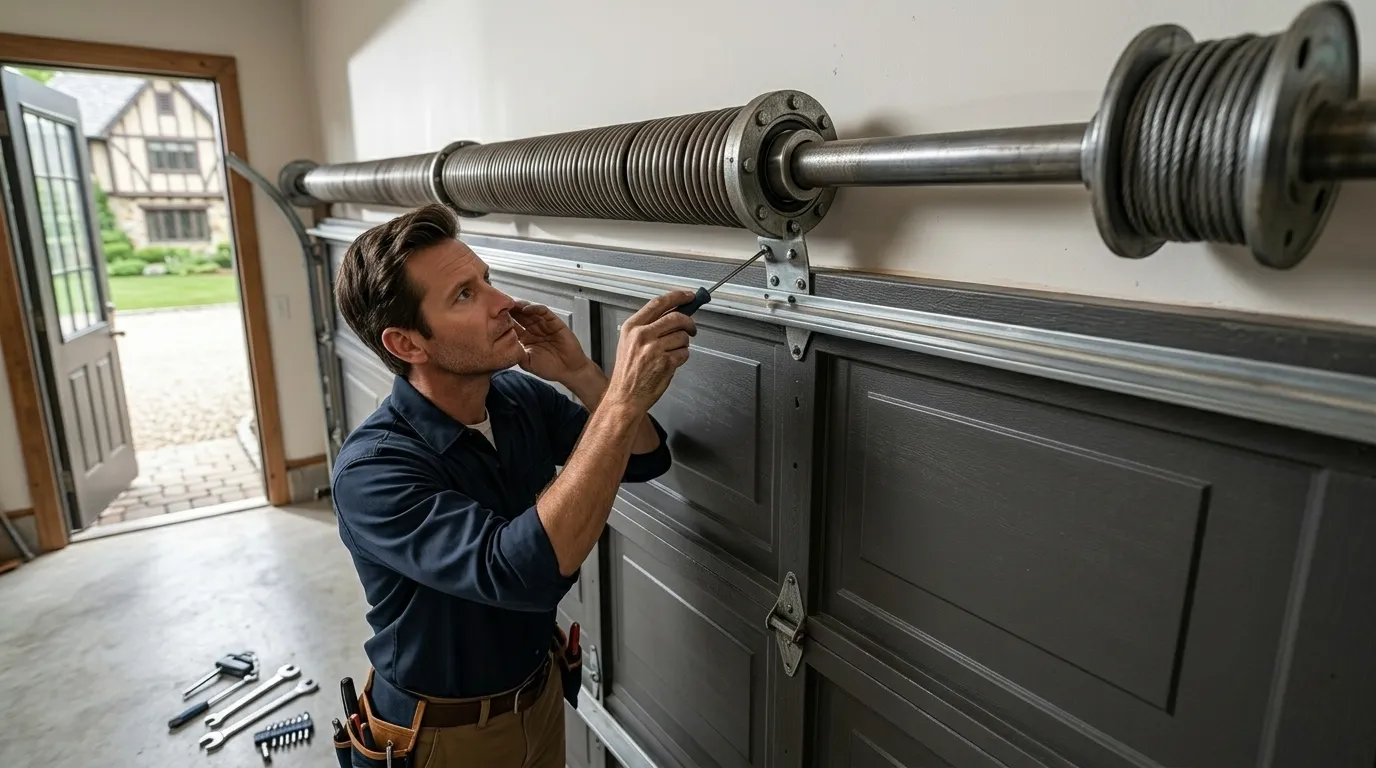
Swapping a roller or tightening a hinge bolt is fine to do yourself. A torsion spring is not - it's wound under enough tension to break a hand or a face, and on a house from the 1970s that spring has likely never been replaced, which means the wire's fatigued in ways you can't see from the ground. That's the line: springs, cables, and anything that involves releasing tension gets a call, not a video tutorial. The other place DIY runs out is parts.
On original 1960s and 70s hardware, an exact match for a bracket or a track section isn't always available - some of it just isn't made any more. When that happens, the honest answer is whether it's worth adapting a modern part to fit or replacing the section outright, not pretending a patch will outlast a proper fix. A full door replacement doesn't get pushed when a spring and a service adjustment will get another decade out of what's already there - with a median household income of $86,644 across this area, most owners would rather spend right once than spend twice.
How we work
What the Weather Here Does to It
The mild temperate climate here is easier on a garage door than most of the country gets, but easier isn't the same as easy. Constant humidity means bare steel corrodes faster than it would somewhere dry, even without a hard freeze to blame. On the stock built in this area between 1965 and 2005, a lot of springs and hinges went in before galvanized or coated hardware was standard, so rust starts at the coil ends and exposed bolt heads well before the mechanical parts actually fail. Weatherstripping along the bottom panel and sides breaks down from UV and heat rather than cold - it goes brittle and cracks instead of freezing and splitting.
None of this is dramatic, which is part of the problem: there's no single storm or freeze that forces a homeowner to notice. The door just gets a little louder, a little slower, a little more off-balance every year until a part finally gives. A service call in this climate is as much about catching that slow drift early as it is about fixing something already broken.
Questions
Common questions
What does a typical service call include?
A walk of the whole system: springs for wear and coil spacing, cables for fraying, rollers and track alignment, hinges, and the opener's force and travel settings. Anything worn gets flagged and priced separately - a service call is a diagnosis and tune-up, not a guarantee that nothing needs replacing.
My house was built in the 1970s - should I expect problems with the original hardware?
A lot of houses in this area date to that era, and original torsion springs, uncoated hinges, and older track sections are common on them. It doesn't mean something's about to fail, but hardware that old is worth a look before it fails on its own timeline, usually at the least convenient moment.
Is it ever fine to replace a spring myself?
No. A torsion spring stores enough tension to cause a serious injury even on a door that looks fine otherwise, and on older houses that spring has often never been swapped, so the wire condition is worse than it looks. This is one job that always gets a call, not a DIY attempt.
How often should a garage door get serviced here?
There's no single interval that fits every door - it depends more on the age of the hardware and how much the door gets used than on a fixed calendar. Doors on original 1960s-70s parts are worth checking sooner rather than later; newer systems can go longer between visits.
Ready when you are
Need a garage door sorted in Delray Beach?
Delray Beach Garage Door Pros repairs and installs garage doors, springs and openers in Delray Beach, FL and the surrounding area.