
Guide
Is Your Old Garage Door Worth Fixing, or Time to Replace
Delray Beach homes mostly date 1965-2005. Here's how that build era and our mild climate decide whether your door is a repair job or a replacement.
Local detail
Season by Season
Delray Beach doesn't hand you a hard winter, so your door never faces the freeze-thaw cycle that cracks seals and snaps cold-brittle springs up north. What it does face is a long stretch of heat and humidity that never really lets up, followed by shorter, milder stretches where things dry out and metal parts that were sweating all season suddenly seize up if they haven't been lubricated. That cycle is steady rather than dramatic, which is part of why a lot of homeowners here don't notice a door going bad until it stops working outright.
There's no ice storm to blame it on. The wear is just the same moisture-then-dry pattern, month after month, on hinges, rollers, and the spring's coil. If your door was installed anywhere close to when the house was built - and a lot of houses in this area date to the 1960s and 70s - that's decades of the same slow cycle on the same original hardware.
Nothing snapped it. It just wore down evenly, which honestly makes it easier to predict than a door that's been through real weather extremes. You can often tell where you are in that curve just by how the door sounds when it opens.
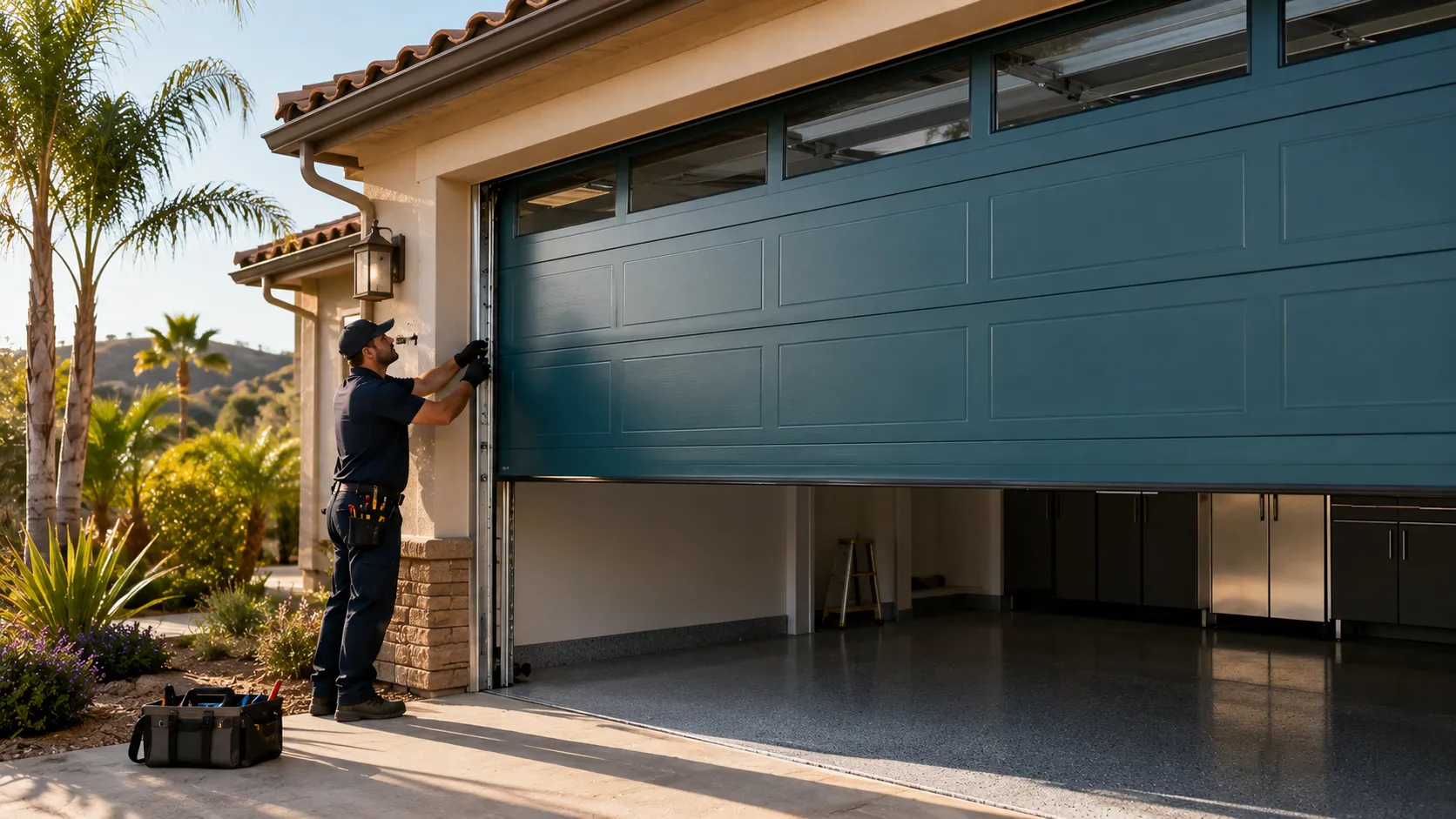

The area
What Is Going On
A lot of the housing in this part of Delray Beach was built between 1965 and 2005, with the typical home going up around 1977. That matters because a door installed with the house, or even a first replacement door from the 80s or 90s, is now running on hardware that predates a lot of the safety and design changes in torsion springs, cable drums, and track gauges. On a lot of these older builds, the springs were sized for the door and climate expectations of that era, not for a door that's been repainted, had a heavier insulated retrofit, or picked up 40 years of small adjustments.
When one of these doors starts binding, sagging on one side, or making a new grinding sound, it's rarely one thing - it's the whole system past the point where any single fix buys you much time. That's the honest answer for a door from this era: sometimes a spring swap solves it, but sometimes the drum, track, and hinges are all at the same age and the smart move is to replace the working parts as a set rather than patch one and wait for the next to go.
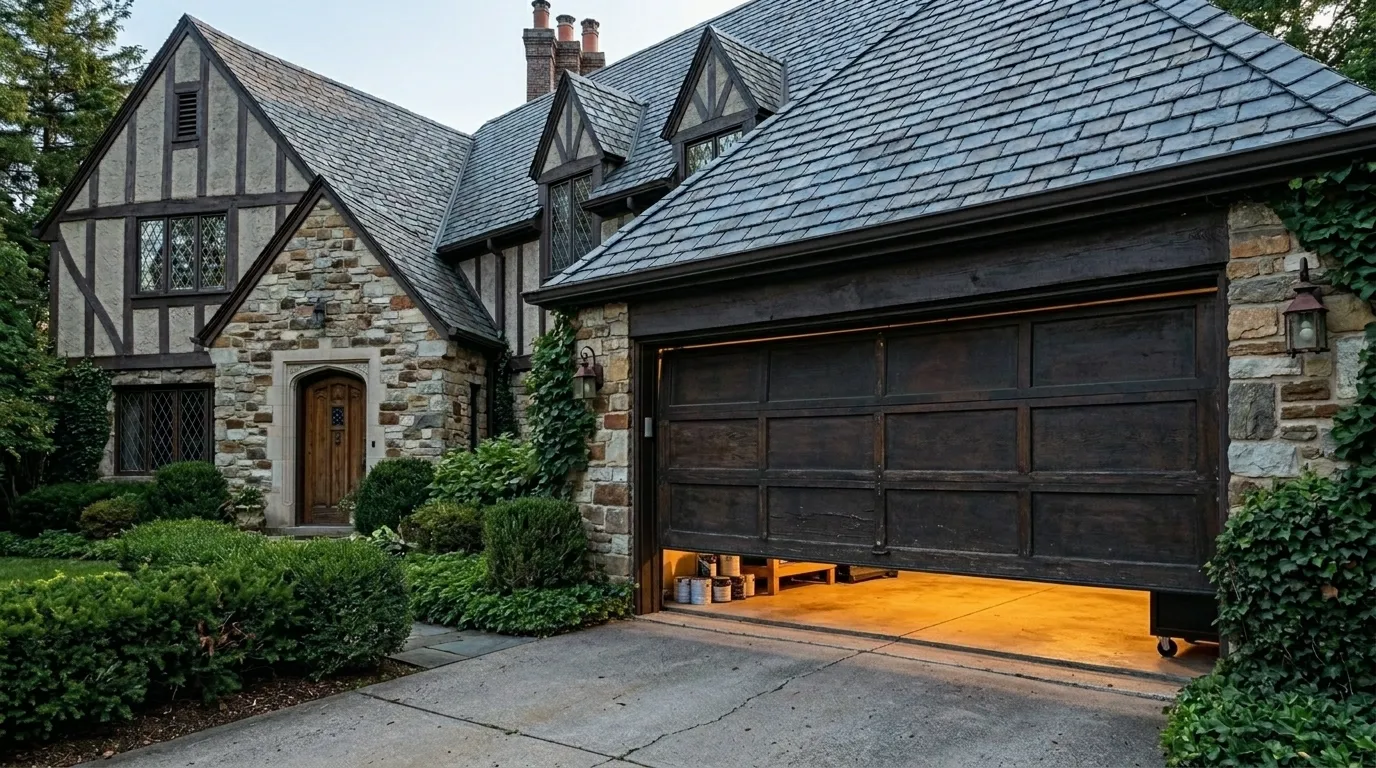
What we find
When It Stops Being a DIY Job
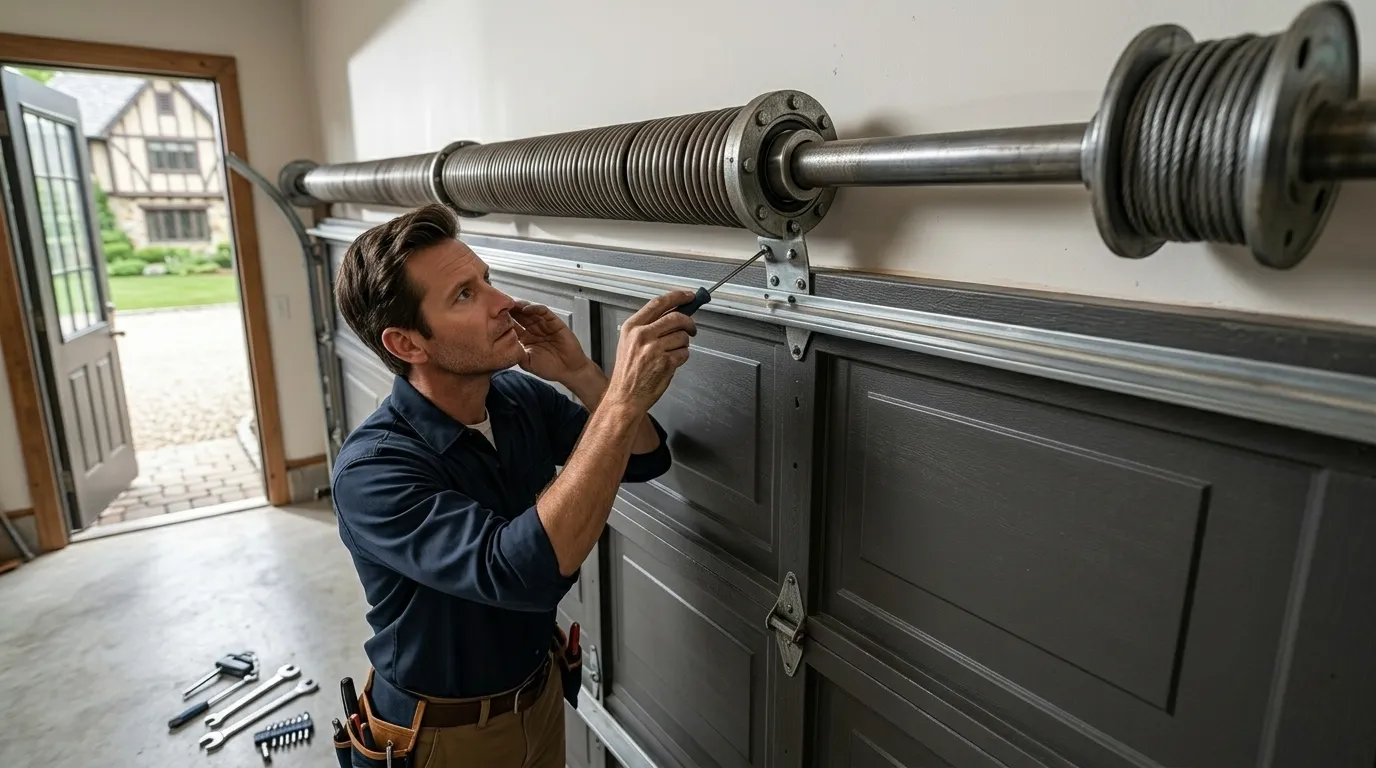
Torsion springs store enough force to break bones, and on a door built to 1970s-80s specs you're often dealing with hardware that's outlived its rated cycle count by a wide margin - the failure point is less predictable than on a newer spring. That's the line: spring replacement, cable work, and anything involving the drums or the torsion bar is not a weekend project on a door this old, full stop. Where we draw an honest limit ourselves: if the door's structural panels are original from a 1970s or 80s build and warped or rusted through, we're not going to spend your money re-hanging hardware on a door that won't hold adjustment for more than a season.
At that point a repair quote becomes a replacement conversation, and we'll tell you that up front rather than bill you for a fix that doesn't last. With median household income in this area sitting around $86,644, most owners can weigh a full replacement against another round of patch repairs and make the call themselves once they know what's actually failing underneath the door.
How we work
What the Weather Here Does to It
Delray Beach sits in a mild temperate band, so your door hardware isn't fighting sub-freezing mornings or ice buildup in the track - that's a real advantage over what a door goes through further north. What it is fighting is sustained heat and moisture that never fully clears, which slowly dries out factory lubricant, lets surface rust start on unpainted spring coils, and swells wood or composite panels on doors from the 60s and 70s that weren't built with today's moisture-sealed materials. None of that shows up as a sudden failure.
It shows up as a door that gets a little louder, a little slower, a little harder to align, over years rather than overnight. That's actually good news for an older door - it means most of what's wrong can be caught and fixed before it becomes an emergency, provided someone's lubricating hardware and checking spring tension on a schedule instead of waiting for the door to jam.
Questions
Common questions
My house was built in the 70s and the door still works - do I need to replace it now?
Not necessarily. A working door from that era just needs its hardware checked - spring tension, cable wear, track alignment. If it's operating smoothly and the panels aren't warped or rusted through, keep maintaining it. Replace it when a repair would cost close to what a new door runs, not before.
Why did my spring break with no warning?
On an older torsion spring, failure is usually plain metal fatigue built up over thousands of cycles, not a weather event. Delray Beach's mild climate doesn't add the freeze-thaw stress that causes sudden cold-weather breaks elsewhere, so when a spring here lets go, it's almost always just reached the end of its life.
Is it cheaper to fix an old door or replace it?
Depends what's failing. A single spring or cable swap on an otherwise sound door is usually the cheaper move. If panels, track, and hardware are all original and all worn, patching one part while the rest is close behind often costs more over a year than replacing the set once.
Ready when you are
Need a garage door sorted in Delray Beach?
Delray Beach Garage Door Pros repairs and installs garage doors, springs and openers in Delray Beach, FL and the surrounding area.