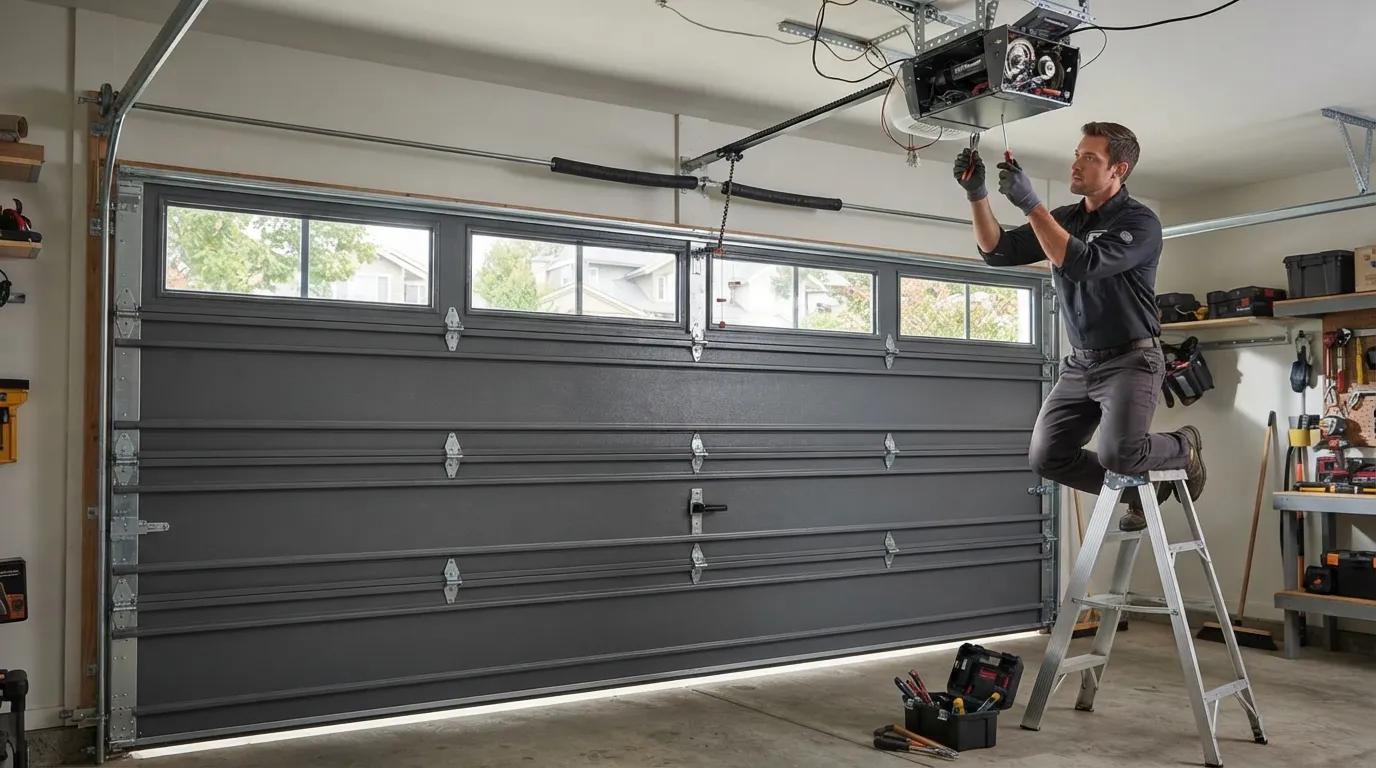
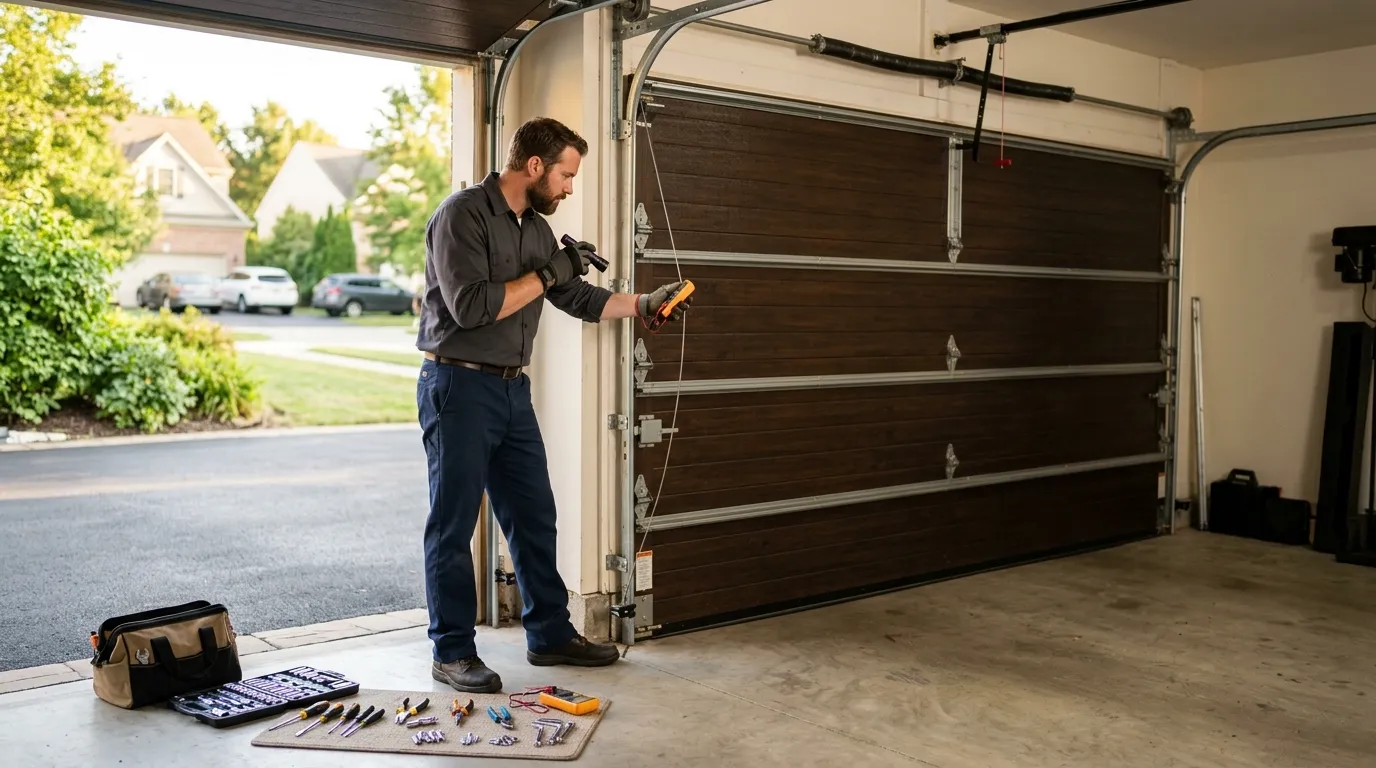
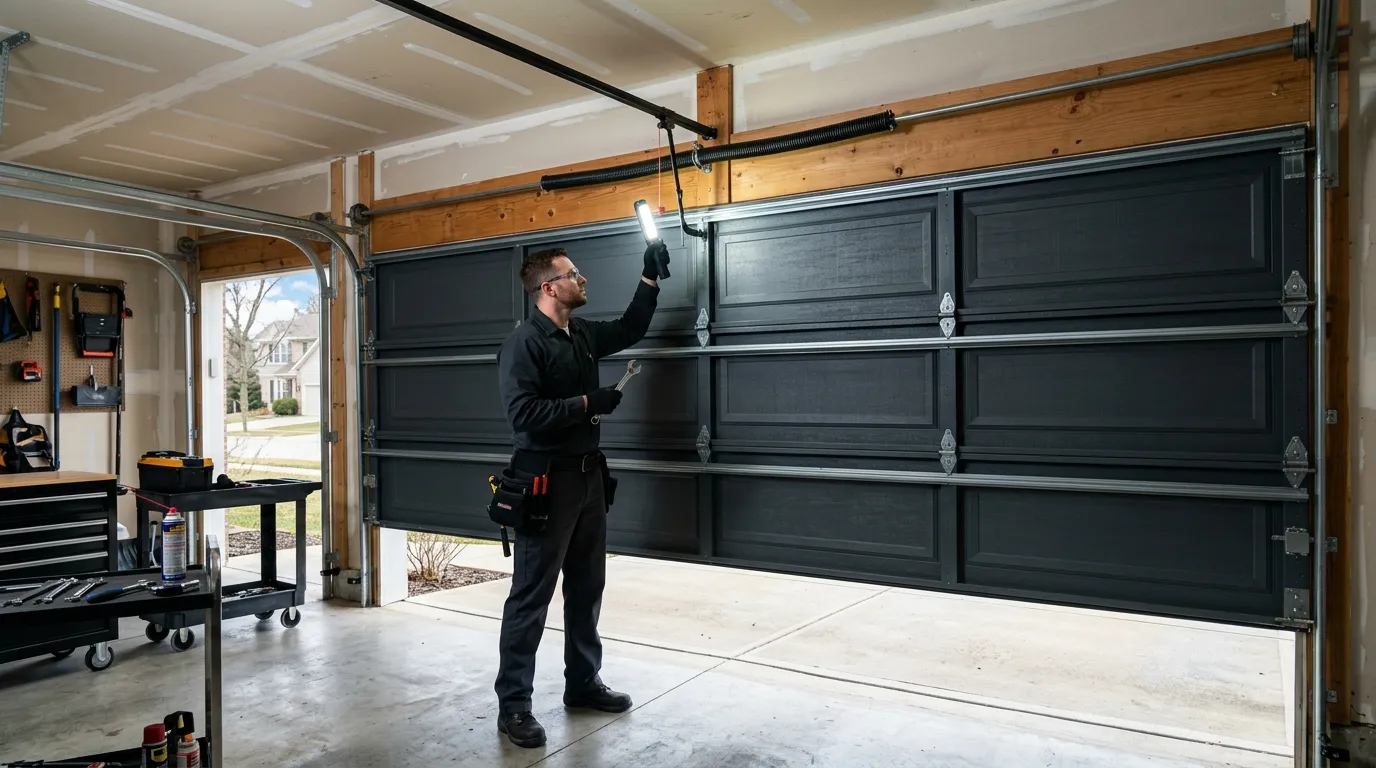
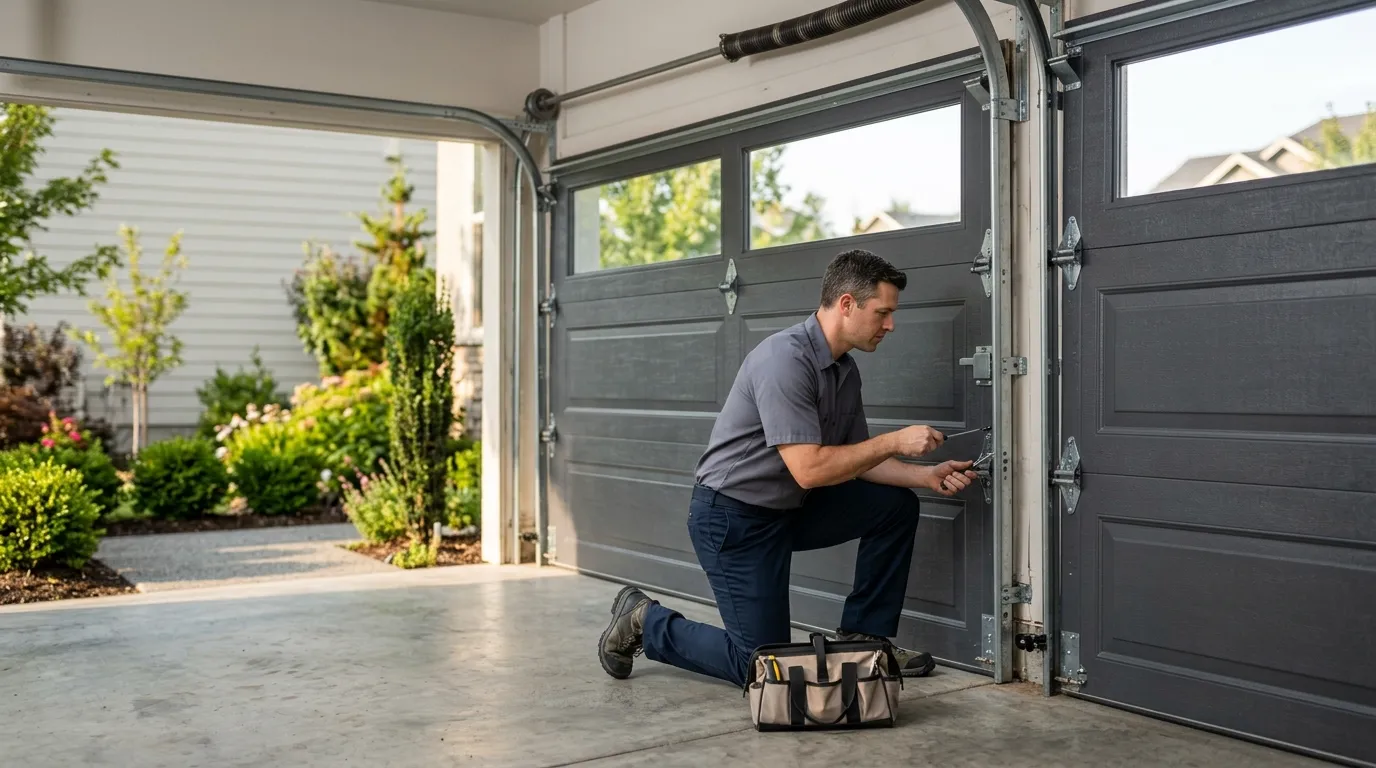
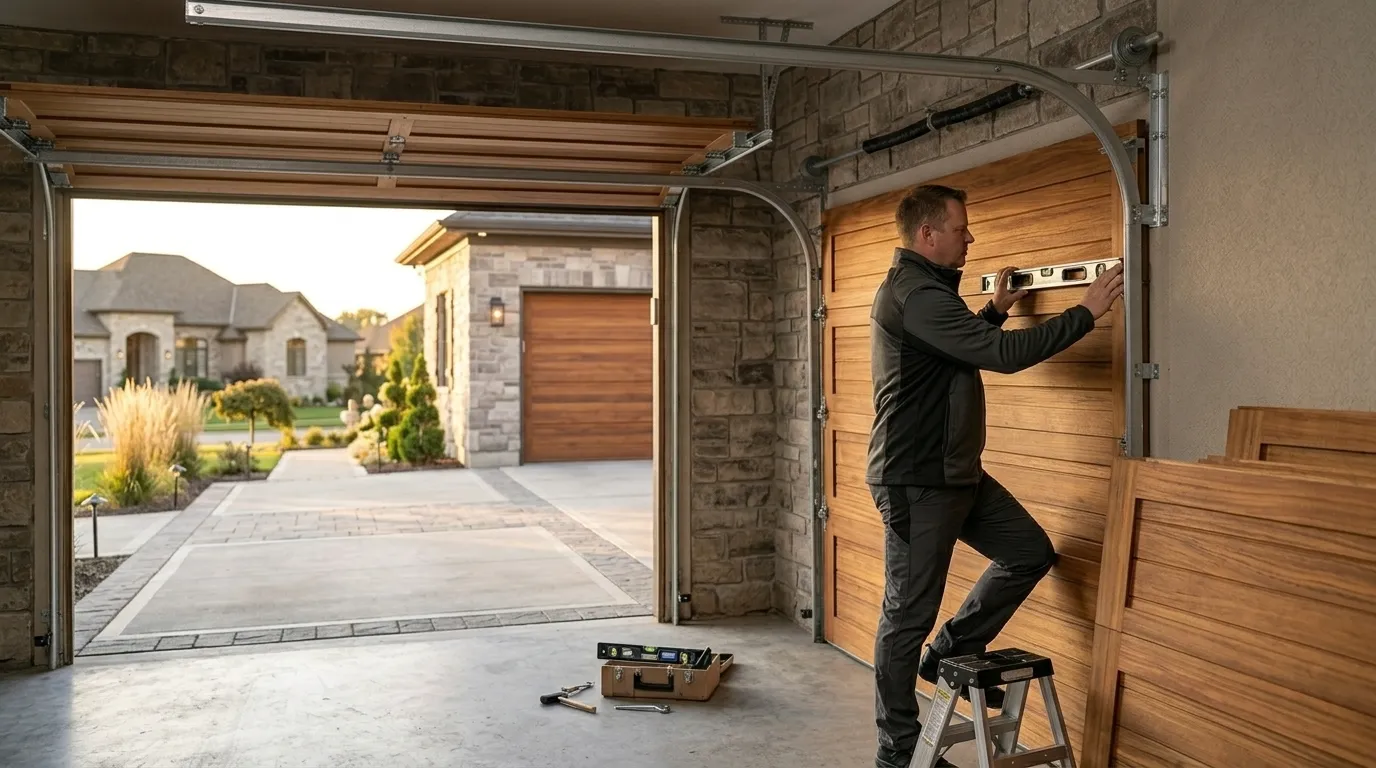
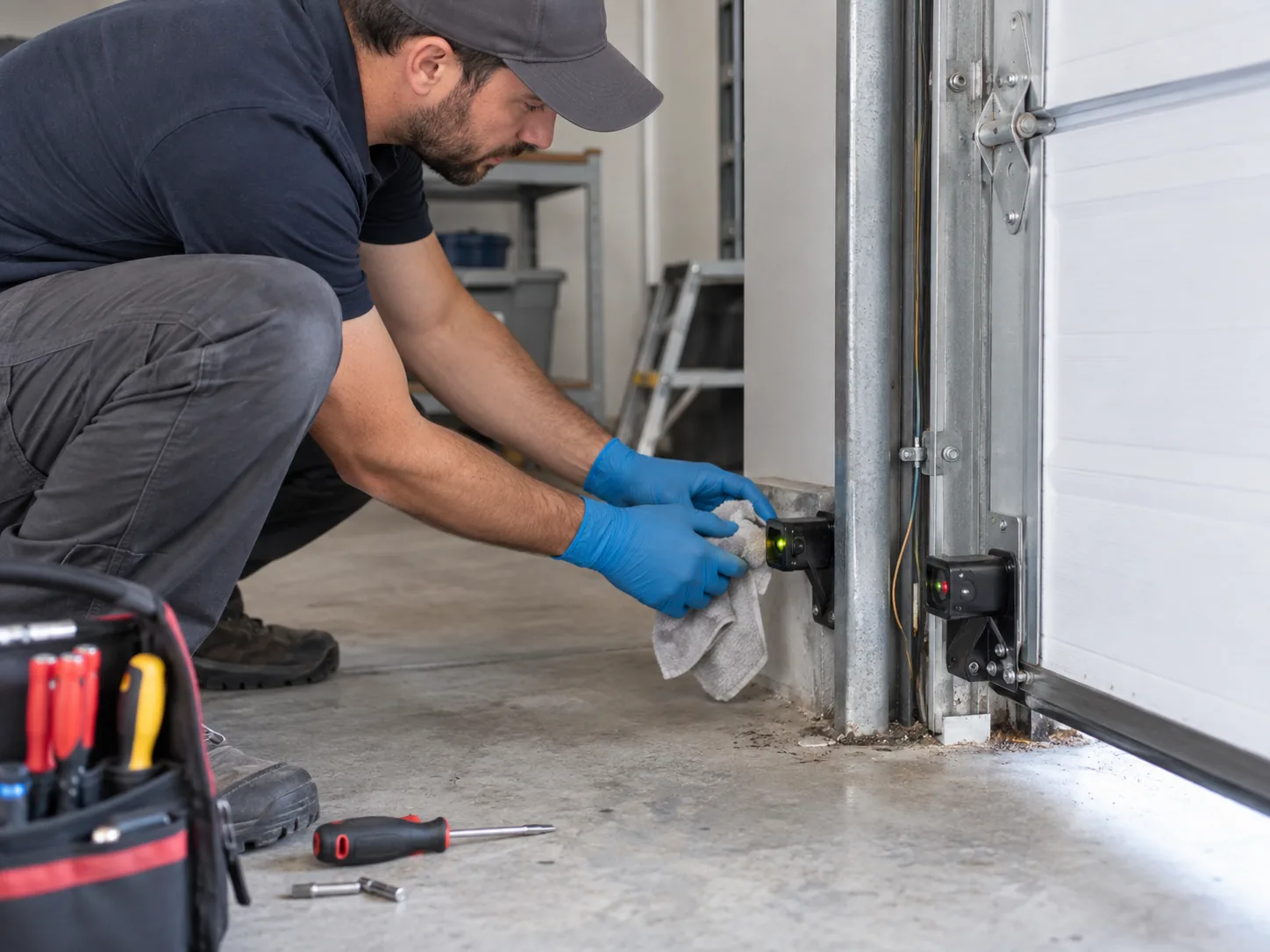
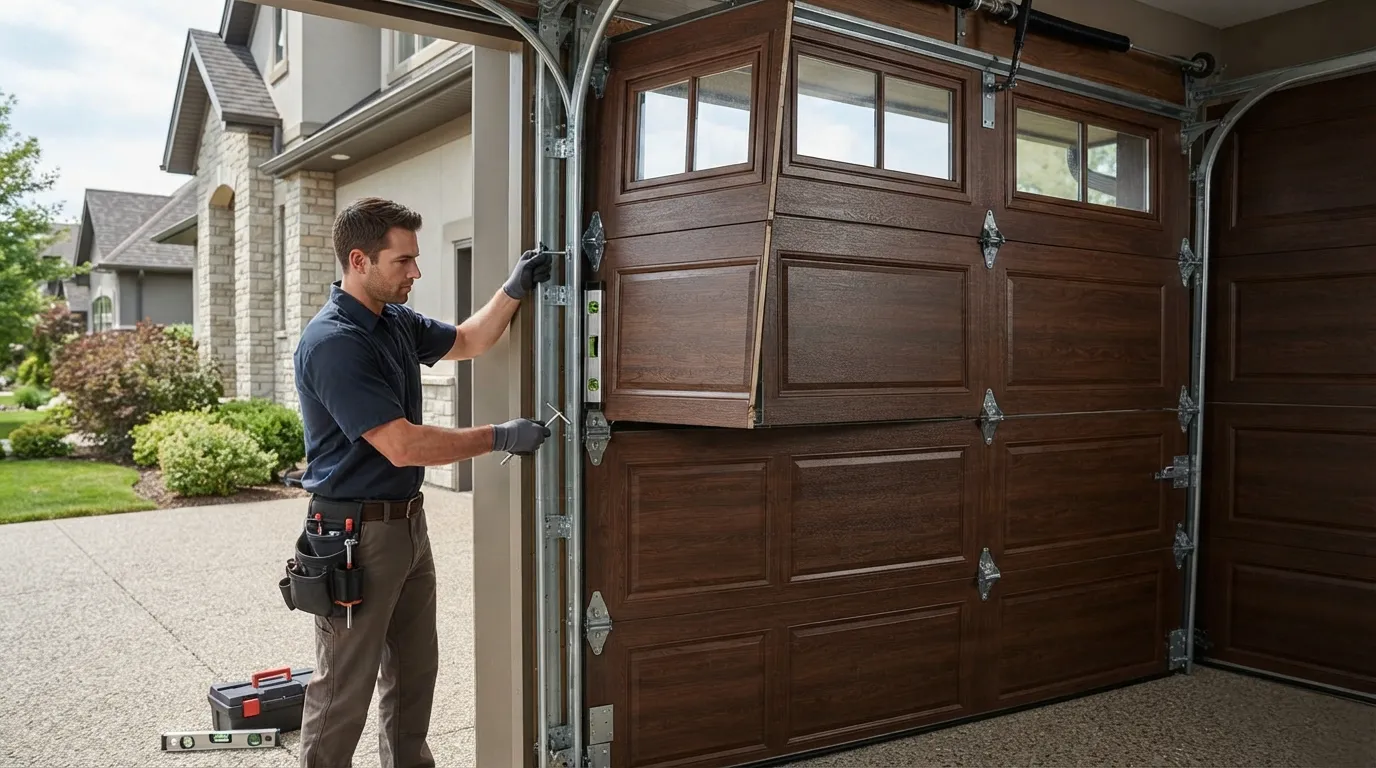
The job goes sideways when someone tries to reuse 1970s-era track brackets with a modern opener kit. The bracket spacing and gauge steel don't always match what a current kit expects, and forcing the fit strains the header over time instead of failing right away - so the business owner doesn't find out until the door drops weeks later.
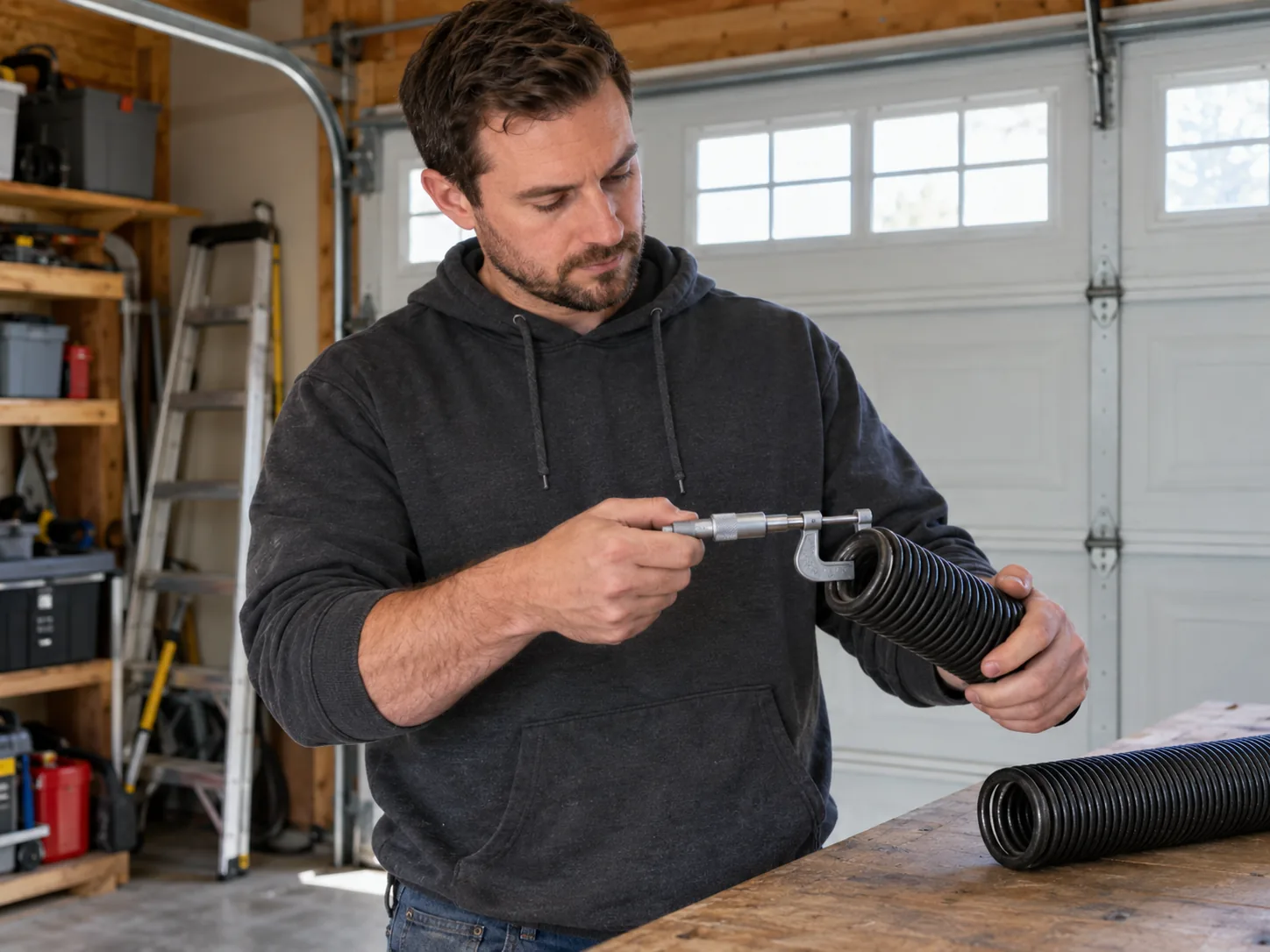
It also goes sideways on doors that have been repainted or resealed cosmetically without anyone opening up the torsion assembly. A door can look maintained and still be running the original spring from the build year, rated for a cycle count it blew past a decade ago.
And it goes sideways when a business tries to keep a door running past the point where replacement is cheaper than repair. On hardware this old, once the track, drums, and springs are all failing at once, patching each one separately usually costs more over a year than replacing the assembly outright. We'll say so plainly when we see it, rather than billing part by part on a door that's done.