
Period-standard opener type
Houses going up in the late 80s came with chain-drive openers as standard, usually 1/3 horsepower units bolted to wood-frame trusses rather than the steel trusses that show up in newer construction.
Coconut Creek, Delray Beach
Coconut Creek's housing dates to about 1989 - a decade past the area median - which shapes the openers we find failing. Opener repair from Delray Beach Garage Door Pros.
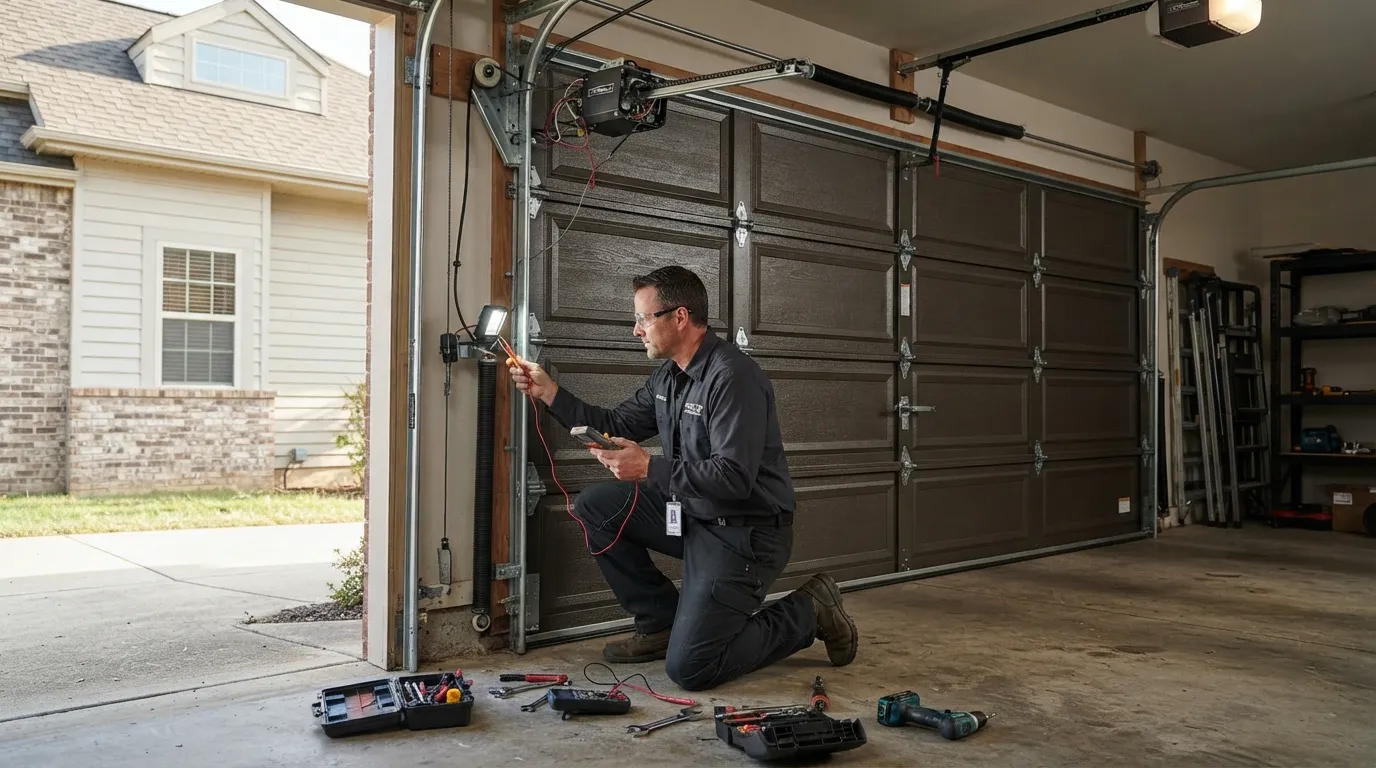
On the truck
Coconut Creek's homes cluster around a median build year of 1989, a full decade after the service area's overall median of 1977. That gap matters for openers specifically.
Houses going up in the late 80s came with chain-drive openers as standard, usually 1/3 horsepower units bolted to wood-frame trusses rather than the steel trusses that show up in newer construction.
By now most of those original units have been swapped at least once, so what we actually find on the rail varies: some houses still run a chain-drive unit from a 90s or 2000s replacement, others have moved to belt-drive.
We carry logic boards, drive gears, capacitors, and travel modules that fit the chain-drive units common to this era, plus the sensor eyes that Congress mandated on all new openers starting in 1993 - a rule that came after a chunk of this town's housing stock was already built, so we still run into retrofits done after the fact. What we don't carry is parts for openers from before the mid-80s; those are rare enough here that we order rather than stock them.
Watch-outs
The failure mode we see most in this town isn't the opener itself - it's the wiring and mounting that a 1989-era garage was built around. Trusses from that period were sized for a lighter unit than what a lot of homeowners now want (a heavier belt-drive with battery backup), and the bracket that held a 1/3 horsepower chain-drive for thirty years can strip out under a 3/4 horsepower unit's torque. We also run into safety sensors added years after the house was built, wired into a junction box that was never meant to carry that circuit, and now corroding at the splice. None of this is dramatic, but it's the kind of thing that turns a same-visit repair into a return trip for a bracket or a proper outlet.
Warning signs
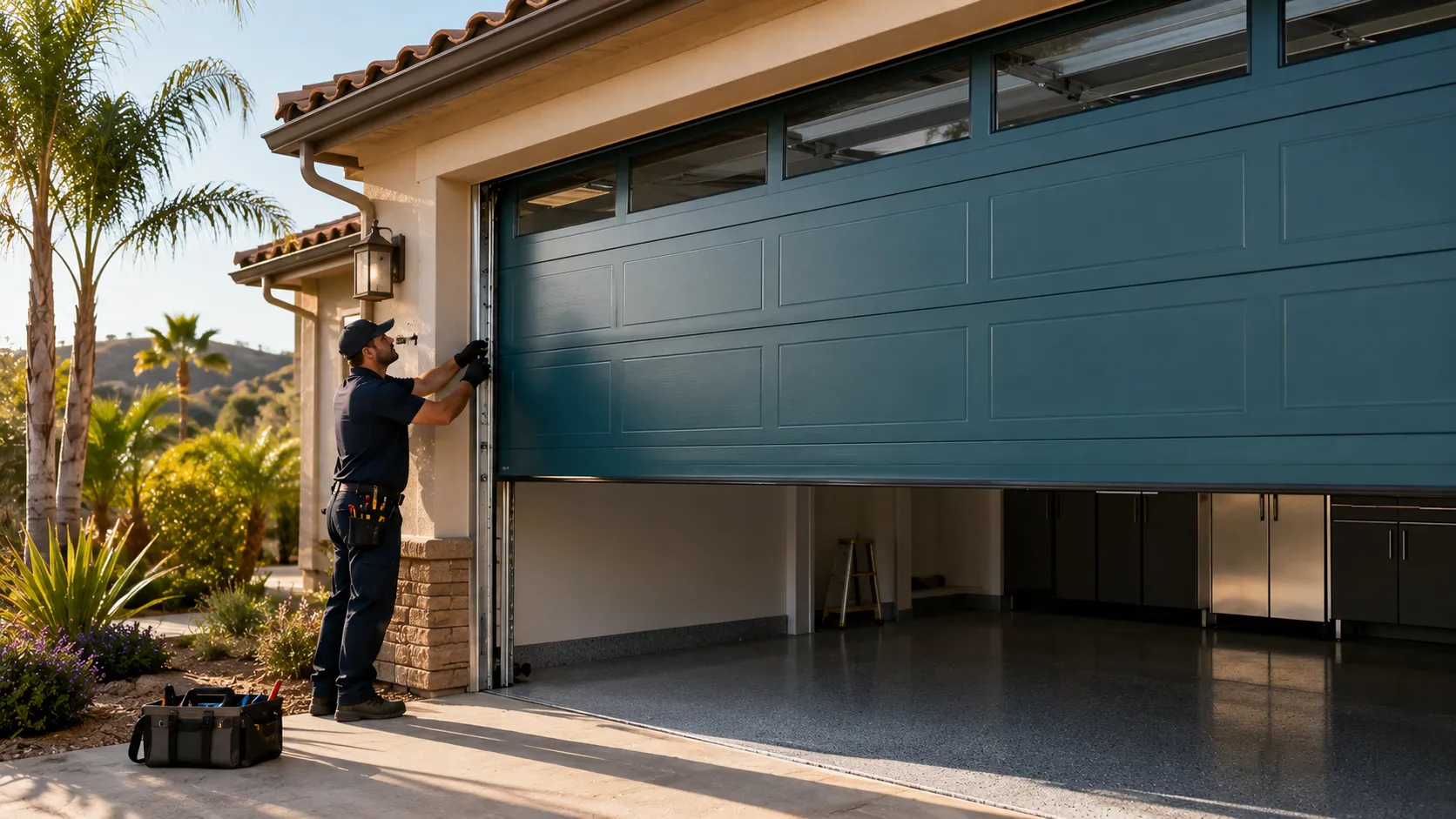
Most calls start the same way: the opener runs but the door doesn't move, or it moves partway and reverses.
On a chain-drive unit from this era, that's usually a stripped gear or a chain that's jumped its sprocket - both wear items on units that have been in service since before belt-drive was common in new construction. The other pattern we see is a door that reverses off the floor for no obvious reason, which almost always traces back to a photo-eye sensor that's drifted out of alignment or gone dim from Florida's coastal humidity settling into the lens housing.
Coconut Creek sits in the mild temperate band that covers this whole service area, so we're not fighting hard freezes that crack plastic housings, but the sun and moisture cycle still does its slow work on rubber grommets and capacitors over three decades.

Job timing
Coconut Creek runs about 13 miles from Delray Beach, so figure that drive into when the truck shows up rather than how long the repair itself takes. Once we're on site, a straightforward gear or sensor swap on a chain-drive opener from this era usually wraps in well under an hour. It runs longer if the bracket or wiring behind the unit needs attention, which, as covered above, isn't unusual on houses built around 1989. We don't quote a fixed window for arrival here since the job is dispatched from Delray Beach rather than a local base - we'll give you a time when you call, not a guess up front.
Pricing
We don't have a posted price list for opener repair in Coconut Creek, and we're not going to invent one. What we can say is that the area's median household income of $75,516 runs lower than the broader service area's $86,644, and across roughly 24,107 households here, most of the calls we take skew toward repair over full replacement - a gear, a sensor, a logic board - rather than a new unit, as long as the motor itself is sound. If the motor's burned out on a unit that old, replacement often makes more financial sense than chasing parts for a discontinued model, and we'll tell you that straight rather than billing hours toward a fix that won't hold.
Questions
Nine times out of ten it's the photo-eye sensors near the floor - they're out of alignment or the lens has picked up grime or condensation. On houses from Coconut Creek's era, these sensors were often added after the original install to meet the 1993 federal safety standard, so the wiring isn't always original either. We check alignment and the splice both.
Depends on what's failed. A stripped gear, a bad capacitor, or a dead logic board on a chain-drive unit is usually a straightforward part swap. If the motor windings themselves have burned out, we'll tell you plainly - chasing parts for a discontinued motor rarely costs less than a new opener.
No. We're based in Delray Beach and drive out to Coconut Creek, about 13 miles, for every job. There's no local depot, so we'll give you an arrival window when you call rather than promising an instant response.
Coconut Creek sits in the same mild temperate band as the rest of our service area, so we're not dealing with freeze damage. But sustained humidity does wear on rubber seals and capacitors over the years, which is a common culprit on openers that have been running since the late 80s or early 90s.
Explore more
Ready when you are
Delray Beach Garage Door Pros repairs and installs garage doors, springs and openers in Delray Beach, FL and the surrounding area.