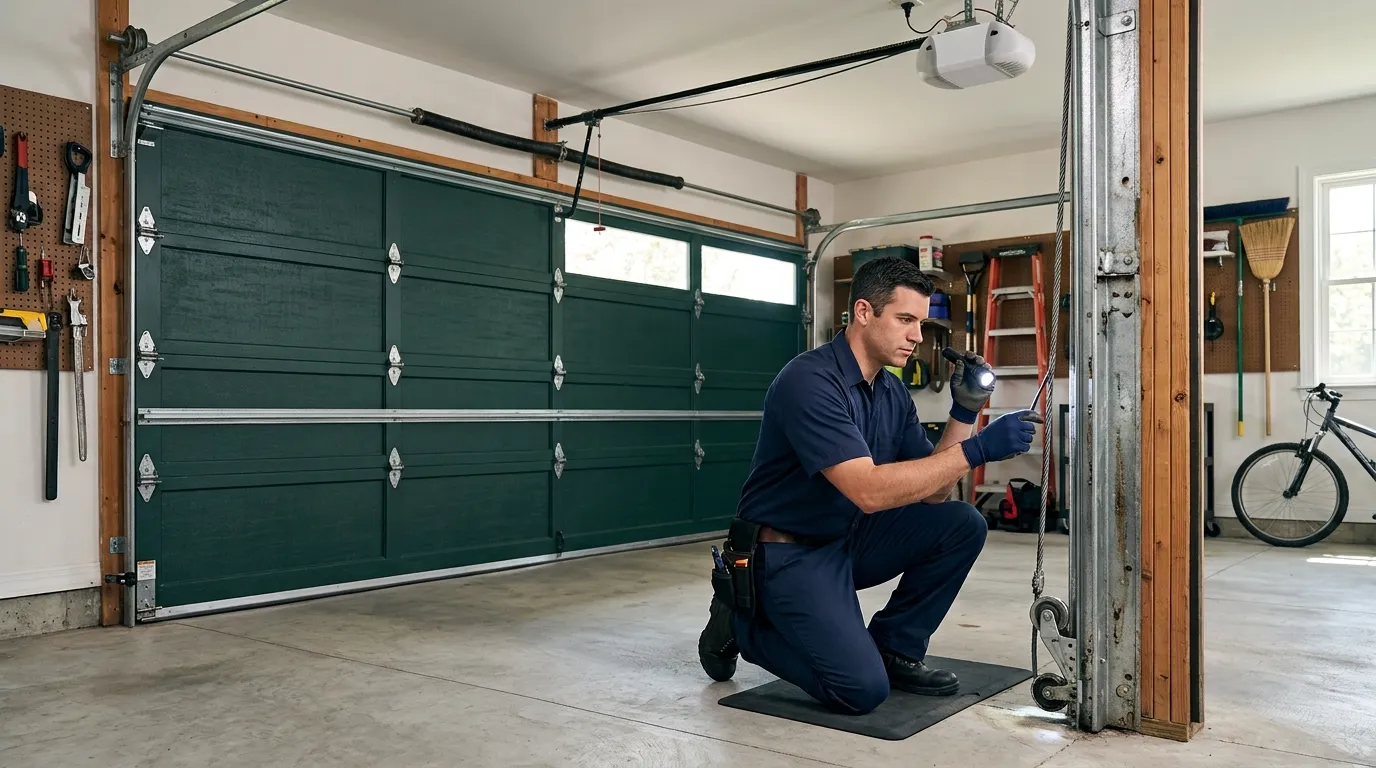
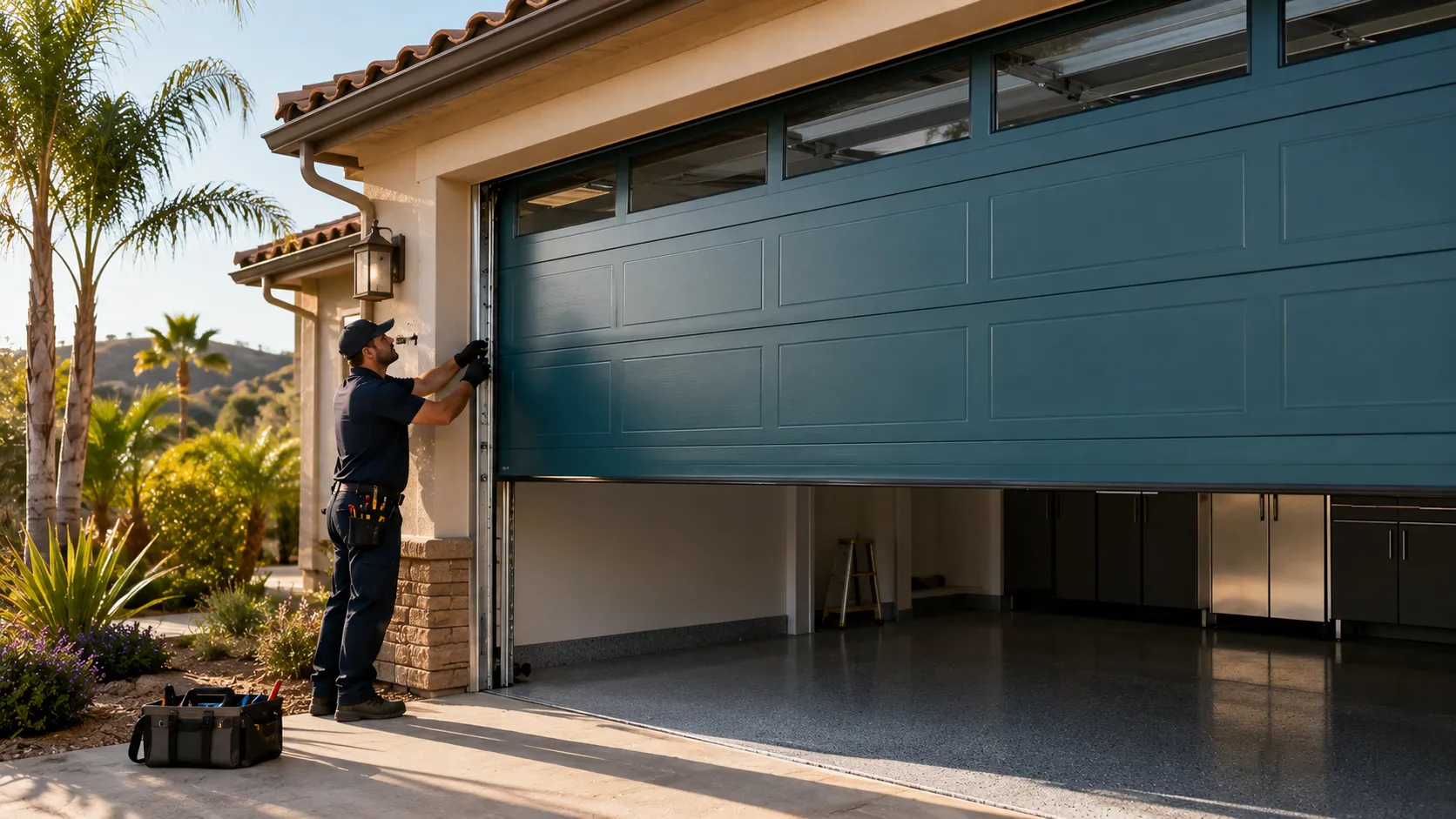
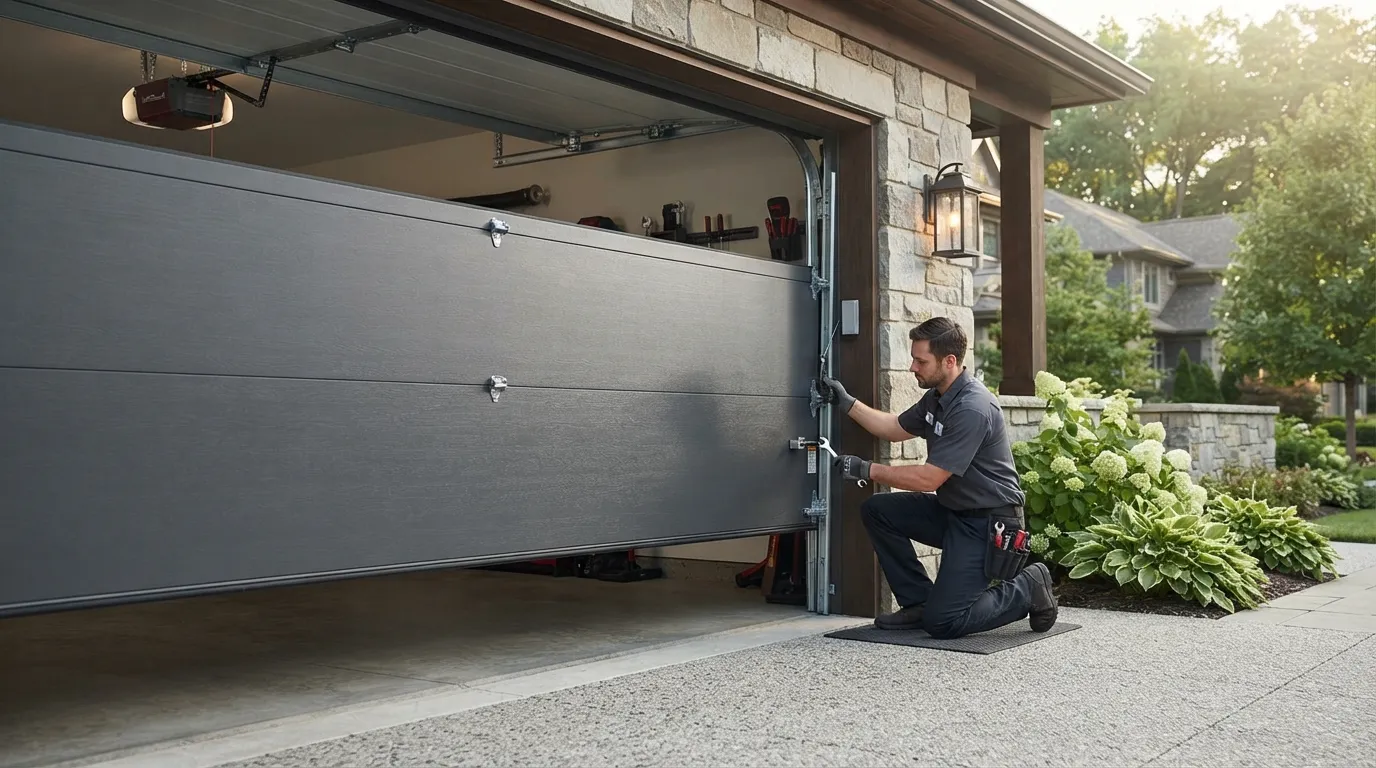
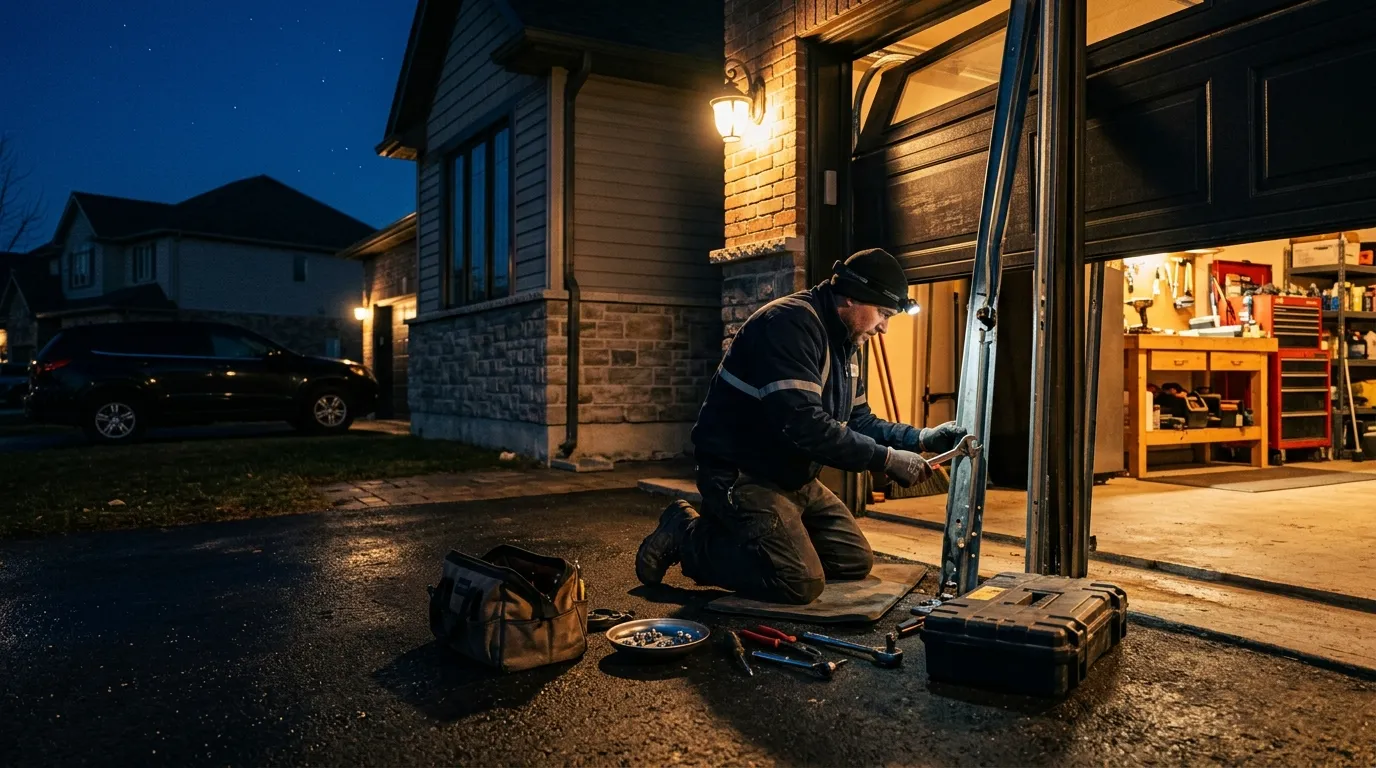
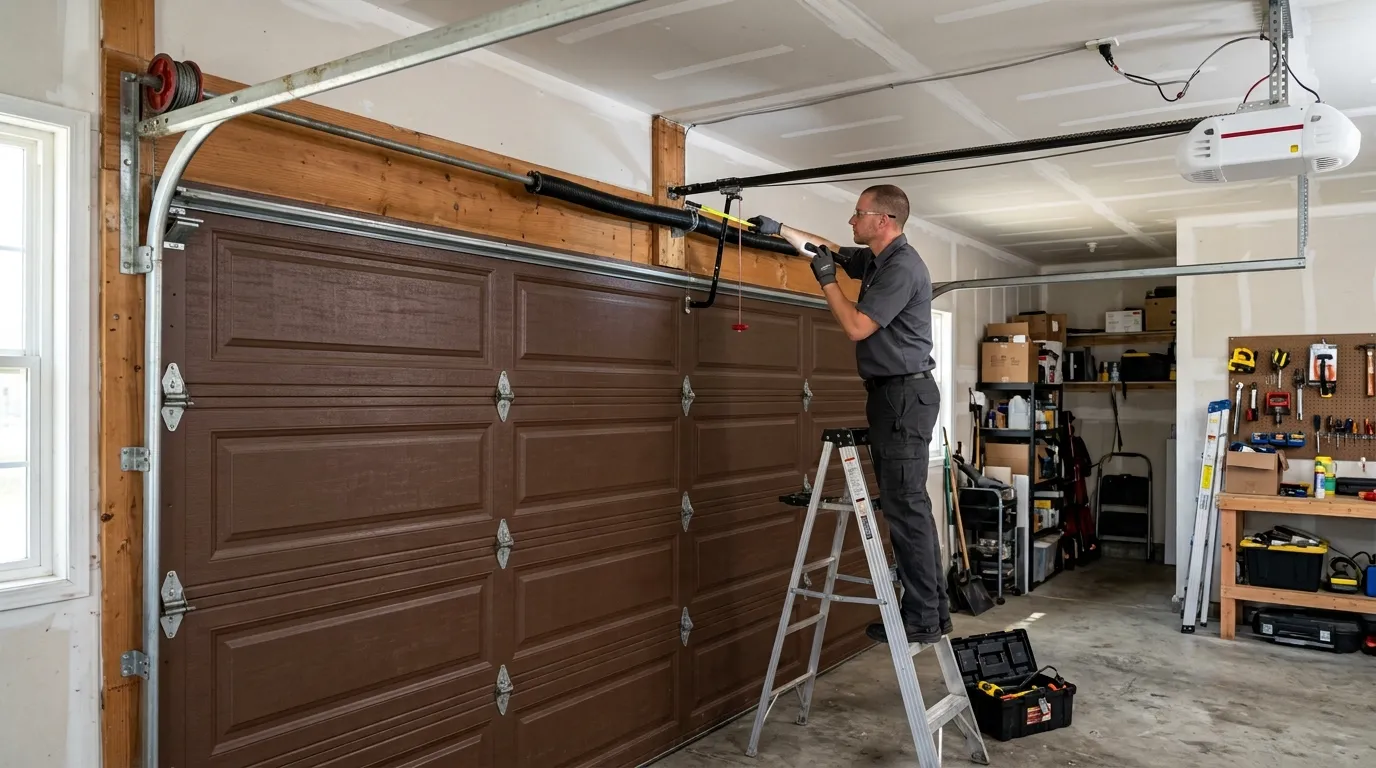
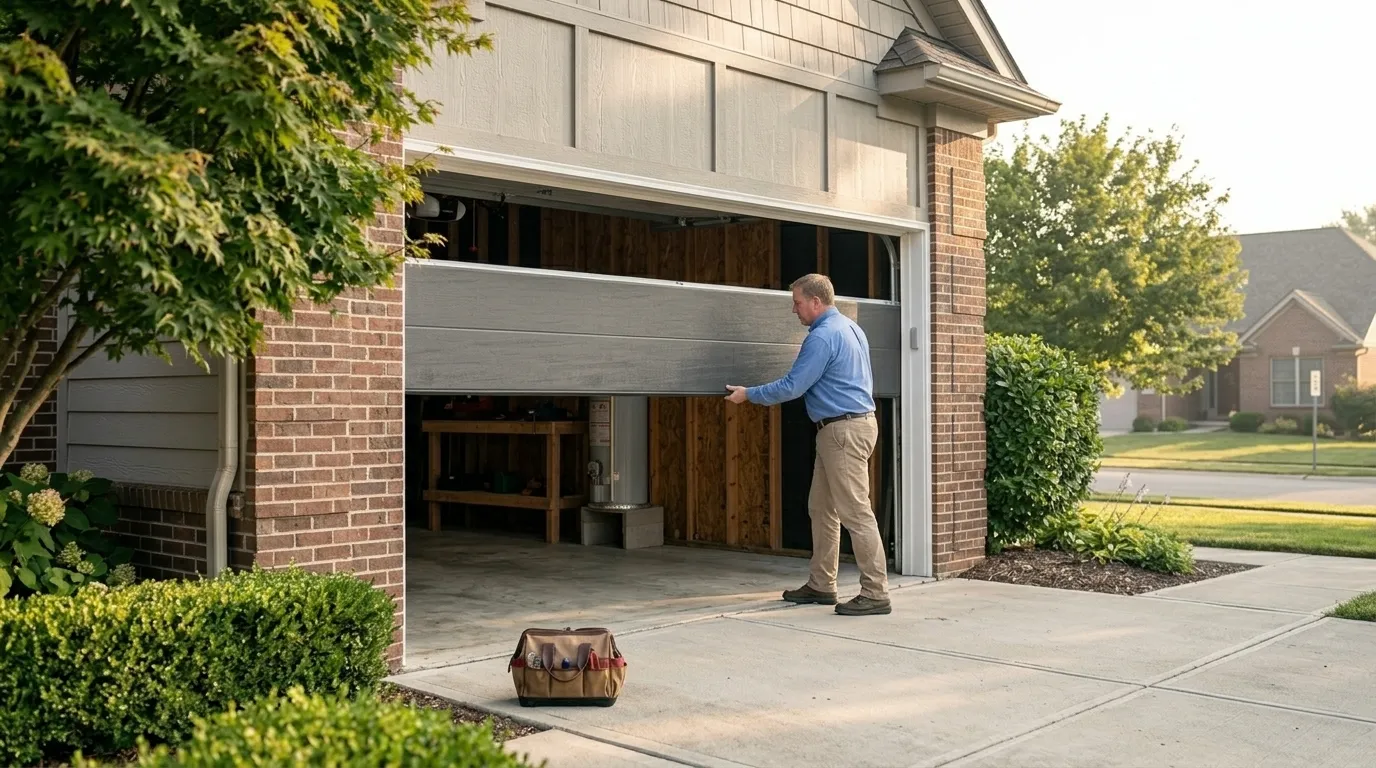
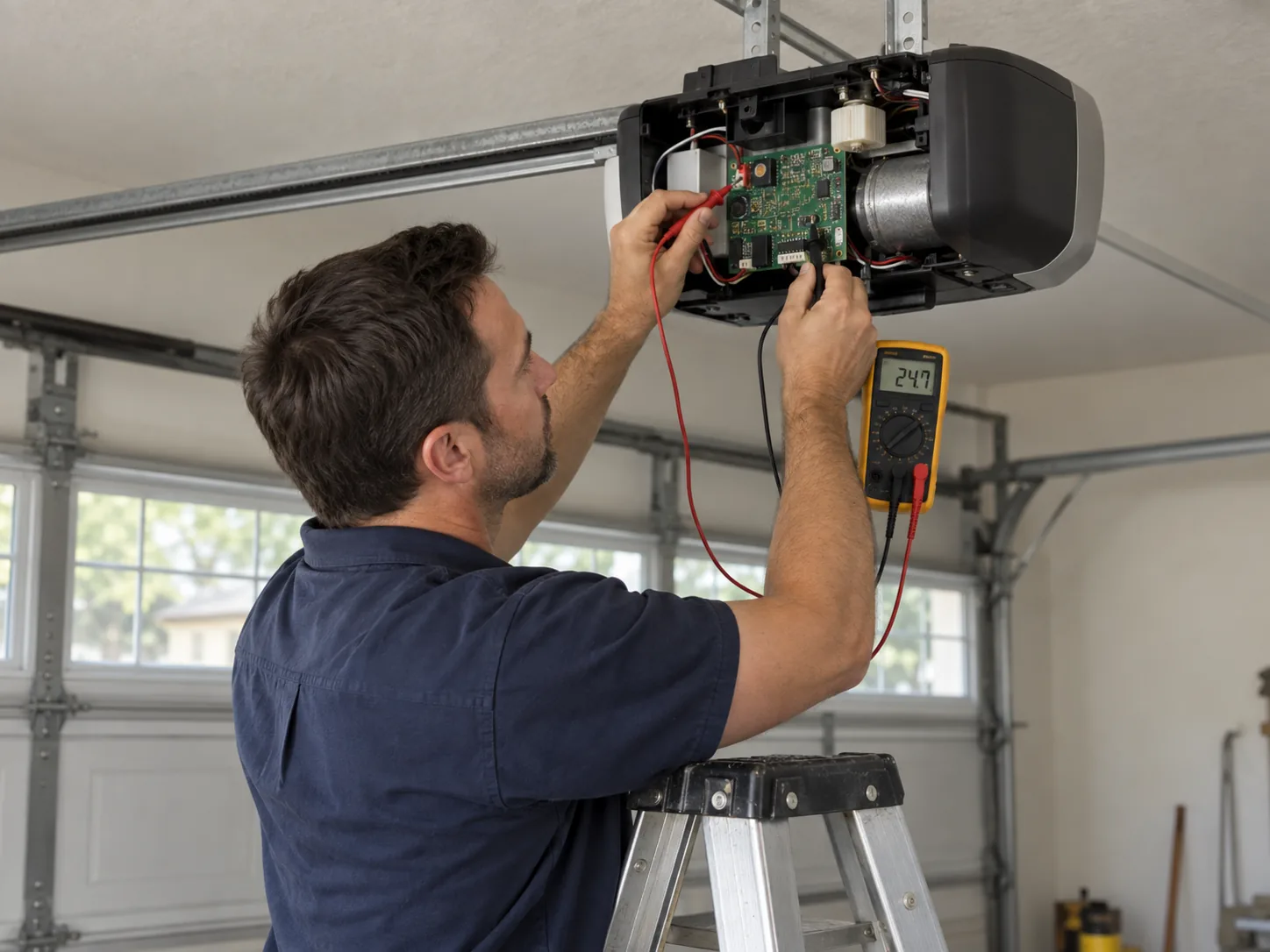
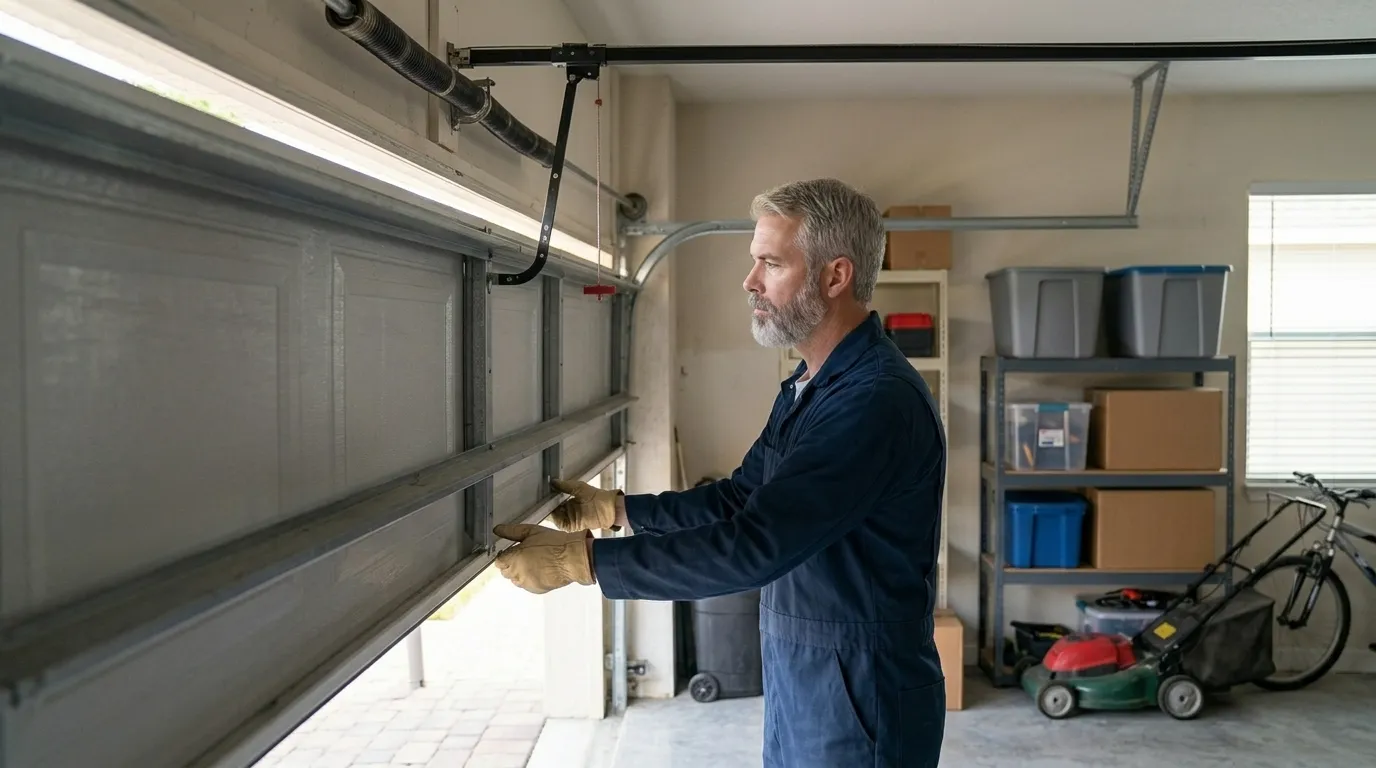
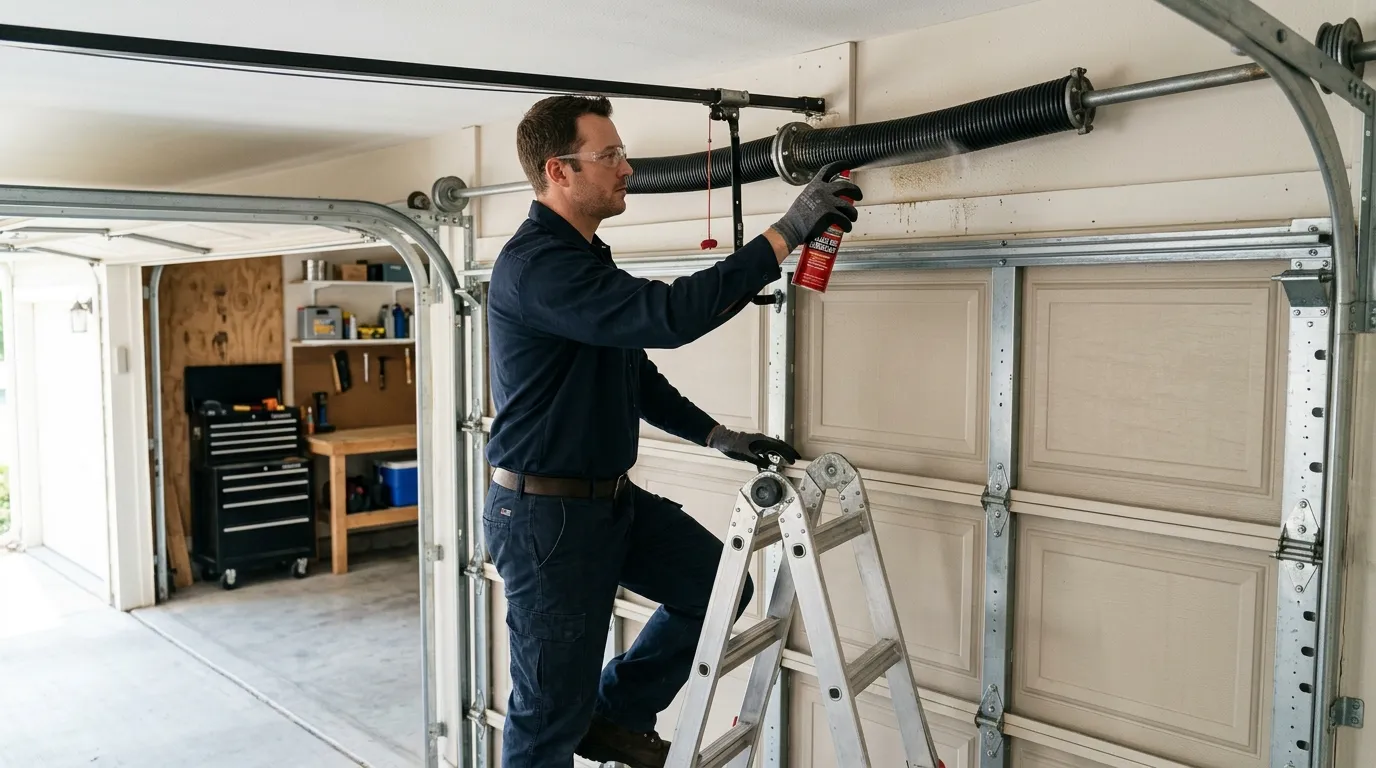
The fault we see most in Palm Beach isn't a broken opener circuit board - it's a spring system that was never designed for the door hanging on it. Somewhere along the way, a heavier insulated panel got dropped onto the original hardware, or a torsion spring got swapped for an extension kit that's fighting the door's actual weight every time it opens.
That mismatch traces straight back to the build year. Palm Beach's housing stock centers on 1971, a few years ahead of the wider service area's 1977 median. Doors from that era were sized and sprung for lighter wood or hollow steel panels, not the double-layer steel or wood-composite doors that get installed today as replacements. When a homeowner upgrades the door but keeps the original track and spring cups because they still look fine, the geometry is off from day one, and the door either binds on the way up or slams the last foot on the way down.
The mild coastal climate here doesn't add rust or freeze damage to the list, so when something fails, it's almost always mechanical wear or a mismatch, not weather. That narrows what we're chasing, which is useful, because it means the diagnosis is usually about the hardware's age relative to the door, not the elements.